Asbestos Removal guide
When Should You Remove Asbestos and When Is It Safe to Leave It?
The Short Answer: It Depends on Condition, Not Age
Not all asbestos needs to come out immediately. If the material is in good condition and nothing is about to disturb it, leaving it in place is often the safer and more cost-effective choice. The decision turns on one thing: whether the asbestos is friable (crumbling, loose, or easily turned to dust) or bonded (locked into a hard matrix like cement sheet). Once you understand that distinction, most of the rest falls into place.
Bonded vs Friable: The Distinction That Drives Everything
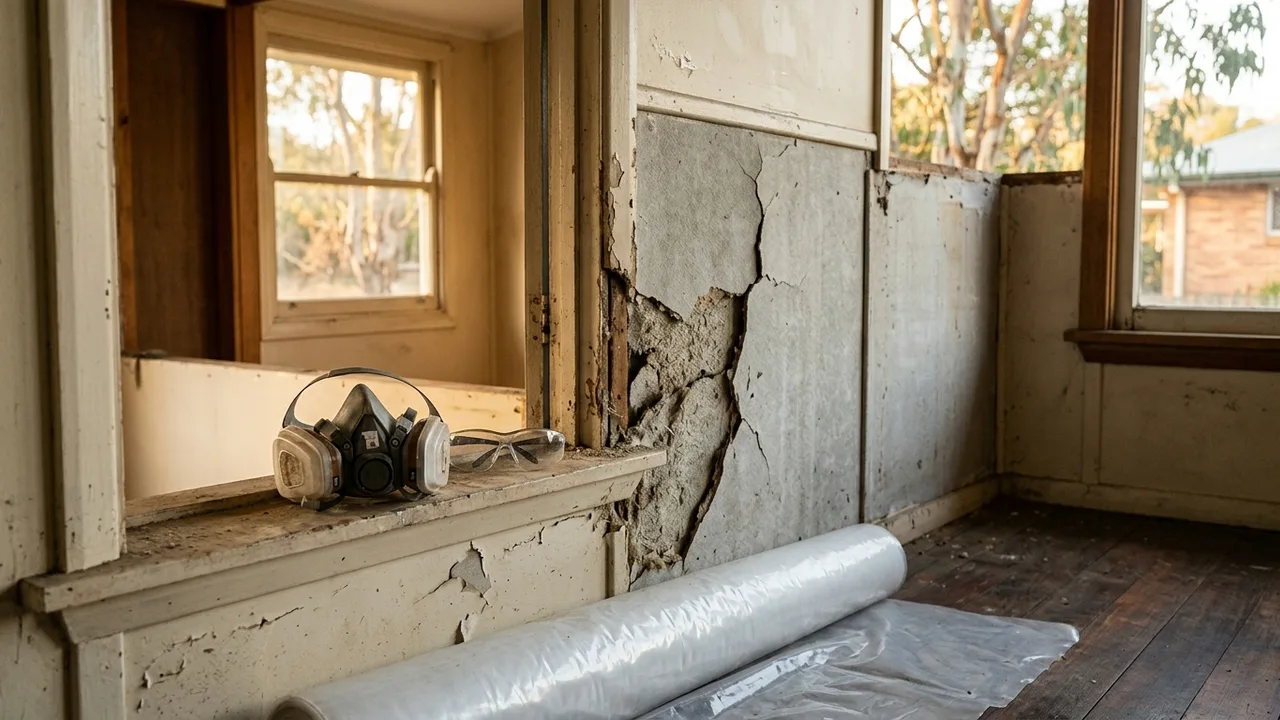
Bonded asbestos is the most common type found in Brisbane homes, particularly in the northern suburbs like Albany Creek, Bald Hills, and Carseldine where housing built between the 1950s and mid-1980s is common. It includes:
- Fibro (asbestos cement) wall sheeting and eaves
- Asbestos cement roofing sheets
- Floor tiles with asbestos backing
- Some textured external cladding
In bonded asbestos, the fibres are locked into a solid matrix. When the material is undamaged and left alone, the fibres largely stay put. The risk is genuinely low.
Friable asbestos is a different matter. It can be crumbled by hand pressure. It includes pipe lagging, some old insulation, spray-on coatings, and deteriorated bonded materials that have broken down over time. Friable asbestos releases fibres far more readily and always requires a Class A licensed contractor to remove. No exceptions.
The practical upshot: a sound fibro eave on a Bracken Ridge home from 1968 is not an emergency. A crumbling lagging around old hot water pipes is.
When Leaving It Alone Is the Right Call
Queensland's asbestos regulations do not require you to remove bonded asbestos that is in good condition and not being disturbed. "In good condition" generally means: no cracks, no water damage causing softening, no flaking, no surface erosion, and not in a location where it will be regularly handled or broken.
Leaving it in place can be reasonable when:
- The material is intact and painted or sealed
- You are not planning a renovation that will affect the area
- The material is in an out-of-the-way location (under the house, inside a wall cavity, on a high eave)
- You plan to sell the property with a declared asbestos register (which a licensed inspector can help you produce)
The ongoing obligation, if you leave it, is to monitor it. Check it at least once a year for signs of deterioration. If it starts to crack, soften from moisture, or gets damaged by a tradesperson or a storm, the calculus changes.
One common mistake homeowners in older parts of Brisbane make is having work done by a plumber, electrician or concreter who unknowingly disturbs asbestos cement. If you know it is there, tell every tradesperson before they start. It is your legal obligation under Queensland law to do so.
When You Should Remove It
Removal becomes the right decision in several situations. None of them are difficult to recognise.
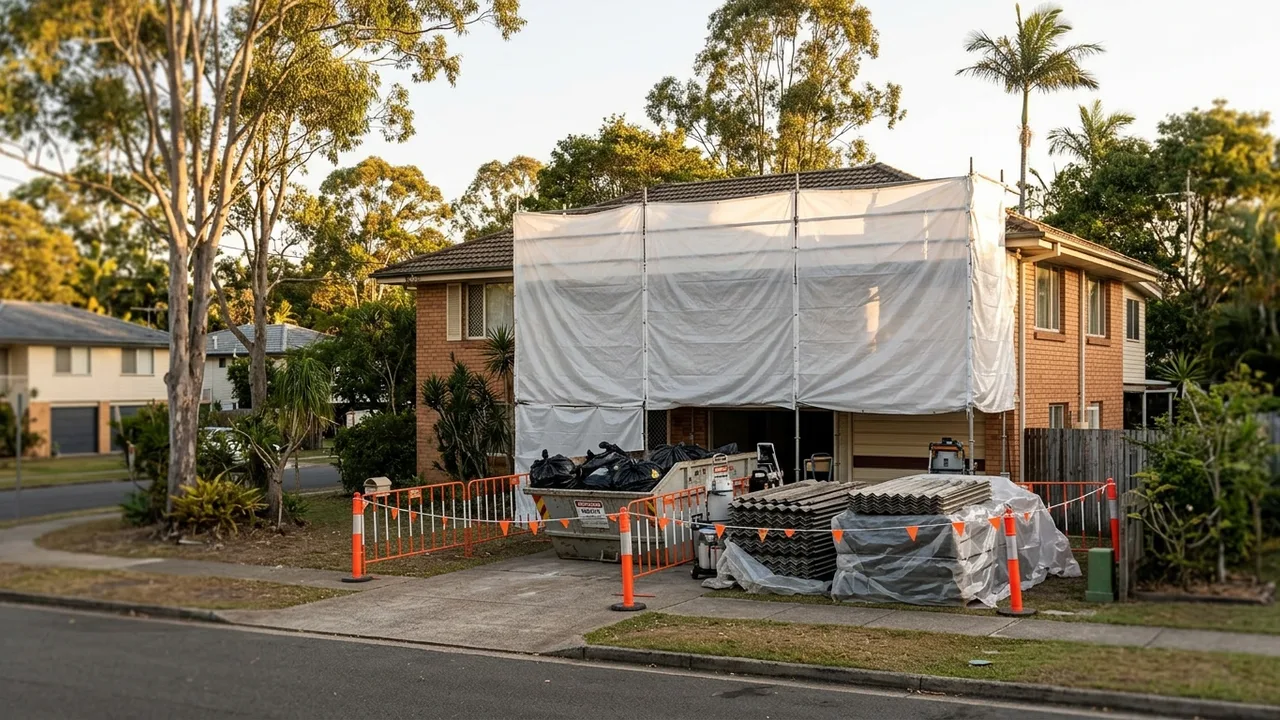
You are renovating. Any work that involves cutting, drilling, sanding or demolishing material that contains (or might contain) asbestos triggers a legal obligation to have it assessed first. In inner-north Brisbane suburbs like Sandgate and Brighton, Queenslander-style and post-war fibro homes are common targets for bathroom additions, deck extensions and roof replacements. If your renovation touches fibro sheeting or an asbestos cement roof, you need a licensed removal contractor involved before work starts. The alternative, having a tradie unknowingly cut through it, is how people get hurt.
The material is deteriorating. Water damage is the main culprit in Brisbane's climate. Leaking roofs, rising damp, and the expansion-contraction cycle through our wet and dry seasons can soften asbestos cement over time. Once the surface starts to crumble or the sheet flexes when you press it, fibres are being released. That is not a material to leave.
It is a friable product to begin with. Pipe lagging, some ceiling insulation materials from the 1970s, and deteriorated loose-fill products require Class A removal regardless of condition. If you find anything powdery, stringy or loose in a pre-1990 home, do not disturb it further and get a licensed inspector in.
You are selling or leasing the property. While there is no legal obligation to remove bonded asbestos before a sale, many buyers today request it or use it as a price negotiation point. Some lenders and conveyancers now ask for a current asbestos register. Having the work done beforehand gives you cleaner documentation and a more straightforward transaction.
Your roof is asbestos cement and due for replacement. Asbestos cement roofing has a finite life. In the Albany Creek and Ferny Grove areas, many original roofs from the 1960s to 1970s are now past their best. Replacing the roof is a logical time to remove the sheeting properly. The incremental cost of licensed asbestos removal during a full roof replacement is typically lower than doing it as a standalone job later.
What Testing Actually Tells You (and What It Doesn't)
Visual identification of asbestos is not reliable. Fibro sheeting looks similar whether it contains chrysotile (white asbestos), amosite (brown asbestos) or nothing at all. The only way to confirm presence is laboratory analysis of a sample taken by a licensed assessor.
Testing typically involves a licensed inspector collecting small samples under controlled conditions, sealing them, and sending them to an accredited laboratory. Results usually come back within a few business days. The cost of inspection and testing is a small fraction of a full removal job, and it is the only way to make an informed decision.
What testing does not tell you is the overall condition of the material or whether it is safe to leave. That judgement requires an experienced eye on-site, not just a lab report. A good inspector will walk through both pieces of information with you.
Cost, Risk and the Middle Path
Let's be honest about trade-offs. Asbestos removal in Brisbane residential properties typically ranges from around $1,000 for a small shed or discrete area up to $15,000 or more for a full roof removal and disposal. That is not trivial. For a homeowner managing a tight renovation budget, the temptation to leave bonded asbestos in place is understandable, and in many cases, defensible.
The middle path, and often the smartest one, is:
- Get a licensed inspection and lab-confirmed test so you actually know what you are dealing with.
- If it is bonded and in good condition, document it in an asbestos register and build removal into your next renovation budget.
- If it is deteriorating, friable, or due to be disturbed, get it removed before work starts. The cost of doing it properly is considerably less than the cost of remediation if something goes wrong.
DIY removal of more than 10 square metres of bonded asbestos material is prohibited in Queensland regardless of condition. Even below that threshold, the disposal requirements are strict: double-bagged, labelled, and taken to an approved facility. The regulatory framework exists because the fibres are genuinely dangerous, not because of bureaucratic habit.
A Closing Word
If you live in a pre-1990 home in Albany Creek, Boondall, Banyo, Carseldine or anywhere else in Brisbane's northern suburbs, there is a reasonable chance some asbestos-containing material is present. That is not a crisis. It is just a fact of the housing stock.
The sensible approach is to find out what you actually have, understand its condition, and make a decision based on that rather than on anxiety or on wishful thinking. An inspection gives you information. Information lets you plan rather than react.
If you want to talk through what you have found in your home, or you are not sure whether a material is asbestos at all, the most useful first step is a call with a licensed local inspector who knows the area and can tell you honestly what needs to happen next.
Quick answers