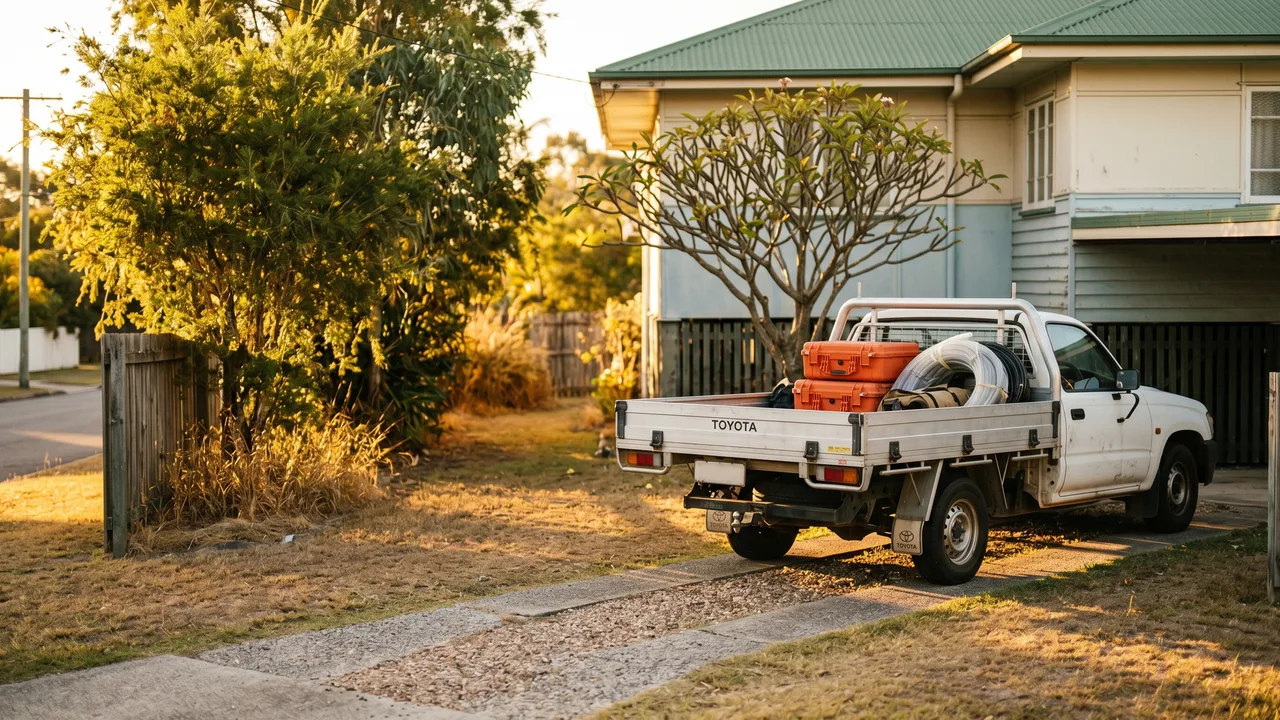
Asbestos Removal guide
How to Choose a Licensed Asbestos Removalist in Queensland
How to Choose a Licensed Asbestos Removalist in Queensland
Check their licence first, then check it again. In Queensland, anyone removing more than the allowable minor amount of asbestos must hold a licence issued by the Office of Industrial Relations (OIR), and you can verify that licence online in under two minutes. Everything else, the price, the timeline, the guarantee, comes after you have confirmed the person turning up at your house is actually authorised to be there.
Here is how to work through the rest of the decision.
Understanding Queensland's Two Licence Classes
Queensland uses two licence classes under the Work Health and Safety (How to Manage and Control Asbestos in the Workplace) Code of Practice.
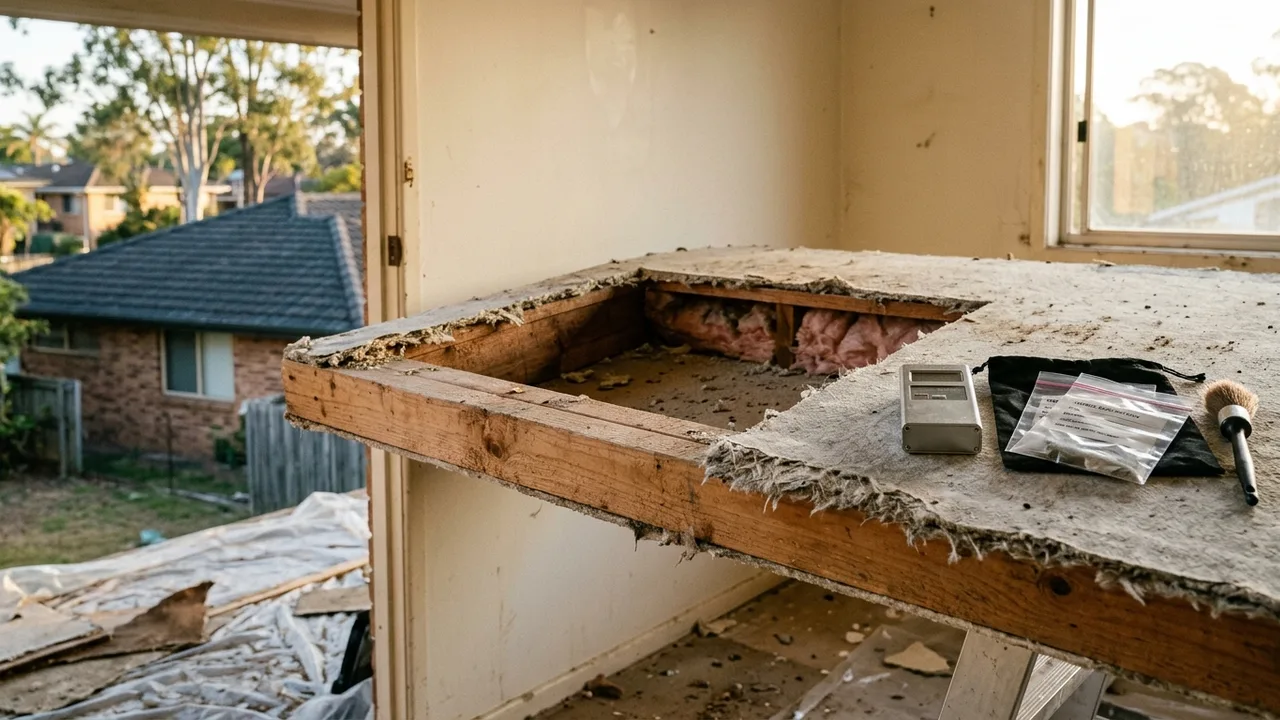
Class B covers non-friable asbestos only. This typically means bonded asbestos cement (AC) sheeting, the flat or corrugated grey sheets you find on roofs, fences, eaves, and shed walls. The asbestos fibres are locked into a cement matrix, so the risk is lower, though it is absolutely not zero.
Class A covers both non-friable and friable asbestos. Friable asbestos is material that crumbles or can be crumbled by hand pressure, releasing fine fibres into the air. Loose-fill ceiling insulation, pipe lagging, and badly deteriorated spray-on coatings fall into this category. Friable removal is the higher-risk work, and only a Class A licensed removalist can do it legally.
Why does this matter to you? If you have an old Queenslander in Ferny Grove with deteriorating eave sheets, a Class B licence is sufficient. If you have pipe lagging in the subfloor or loose material in the ceiling cavity, you need Class A. A removalist who quotes for the job without first identifying the asbestos type is cutting a corner you should not ignore.
How to Verify a Licence Before You Sign Anything
Queensland's OIR publishes an online register of asbestos removal licence holders. Search the business name or the individual licence number and you will see the licence class, the expiry date, and whether it is current.
A few things to look for beyond the basic licence status:
- Individual vs company licence. The company may hold a licence, but the workers doing the actual removal need to be named or covered under that licence. Ask who specifically will be on site.
- Expiry date. Licences are not permanent. A licence that expired three months ago is no licence at all.
- Insurance. Ask for a current Certificate of Currency for public liability insurance before any work starts. This is separate from the licence but equally important.
You can also check whether the removalist has submitted the required notification to Workplace Health and Safety Queensland (WHSQ) before starting work. For jobs involving more than 10 square metres of non-friable asbestos, or any amount of friable asbestos, notification is mandatory. A removalist who skips this step is not just cutting a corner; they are creating a record problem for you as the homeowner if you ever sell the property.
What a Legitimate Quote Should Include
A written quote from a licensed removalist should spell out more than a dollar figure. If it does not, ask for the detail in writing before you commit.
A proper quote typically covers:
- The scope of work, specifying which materials are being removed and whether they are friable or non-friable
- How the area will be enclosed and decontaminated (for friable work, a full enclosure with negative air pressure is standard)
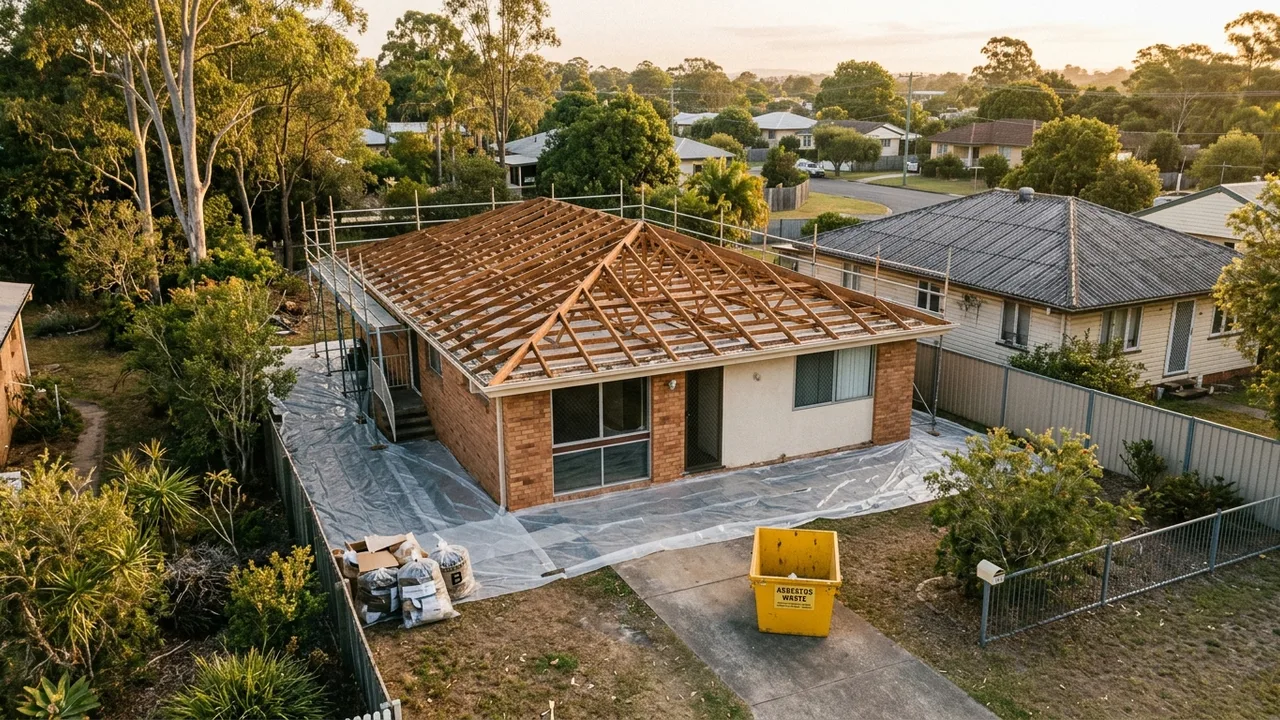
- Where the waste will be disposed of (it must go to an approved Queensland landfill facility, not a general skip bin)
- Whether a clearance certificate is included or charged separately
- The timeline and who will be on site
On cost: residential asbestos removal in the Brisbane area typically runs anywhere from around $1,000 for a small shed sheet replacement up to $15,000 or more for a full roof removal and disposal on a larger home. Friable removal costs more than non-friable, sometimes significantly more, because the safety requirements are stricter and the work takes longer.
Be cautious of quotes that are dramatically lower than others. Underpricing usually means someone is skipping the disposal documentation, using unlicensed labour, or both. The cheapest job can become expensive when it creates a compliance issue at settlement time.
The Clearance Certificate: Why It Matters More Than You Think
When the removal work is finished, a licensed asbestos assessor (a separate role from the removalist, in most cases) conducts a clearance inspection. If the area passes, they issue a clearance certificate confirming that the space is safe to reoccupy and that the asbestos has been removed to the required standard.
This document is not just a formality. It protects you in several ways:
- It is evidence that the work was done legally if questions arise later
- It is typically required by conveyancers and solicitors when you sell the property
- It provides a record for future owners or tradespeople working on the house
Some removalists include the clearance inspection and certificate in their quote. Others charge separately, often $200 to $500 depending on the job size. Either arrangement is fine, but confirm it upfront so you are not surprised.
In suburbs like Sandgate, Brighton, and Banyo, where a lot of the older housing stock dates from the 1950s through to the 1980s, asbestos is common and property transactions where undisclosed asbestos comes up are a genuine issue. Having a clearance certificate filed away is simply good housekeeping.
Local Context: What to Expect in the Albany Creek and Northern Suburbs Area
The northern Brisbane suburbs covered here, including Albany Creek, Bald Hills, Bracken Ridge, Carseldine, Boondall, and across to Sandgate and Brighton, have a significant amount of post-war housing. Fibro (asbestos cement) construction was the affordable choice for much of that era, and it shows up in roofs, eaves, fences, wet area linings, and outbuildings.
A few things worth knowing for this area:
- Shed and garage sheeting is extremely common in the larger blocks around Albany Creek and Bald Hills. Many owners do not realise the sheets in a 1970s shed are AC sheeting until someone drills a hole.
- Salt air from the bay is not a major factor for inland suburbs like Albany Creek or Ferny Grove, but for bayside properties in Sandgate, Brighton, and Shorncliffe, salt air can accelerate the degradation of AC sheeting, meaning it is more likely to be in a friable or near-friable condition than the same material inland.
- Roof replacement projects often reveal asbestos that was not on anyone's radar. If you are replacing a roof on a pre-1990 house and the existing sheets have not been tested, factor in an inspection and testing step before the roofers start work.
Making the Final Decision
By the time you have verified the licence, confirmed the insurance, reviewed a detailed written quote, and understood what is included in the clearance process, you are in a strong position to make a sensible comparison between two or three removalists.
A few honest trade-offs to weigh up:
- Inspection first vs removal first. If you are not certain what you have, an asbestos inspection and lab-confirmed test ($200 to $500 typically) before getting removal quotes will make those quotes more accurate and avoid any scope creep surprises on the day.
- Bundled vs separate services. Some operators handle inspection, removal, disposal, and the clearance certificate as a single package. Others are removal-only. Neither is inherently better, but a single operator managing the whole process means clearer accountability if something goes wrong.
- Speed vs thoroughness. Friable removal done properly takes time. If a removalist is promising to have a friable job done by the end of the day for a suspiciously low price, the corners being cut are probably the safety ones.
If you are based in Albany Creek or the surrounding northern Brisbane suburbs and you want help connecting with a licensed local removalist rather than searching blind, this service exists to make that easier. We connect homeowners with vetted providers in the area. There is no obligation to proceed, and you will know exactly who holds the licence before anyone sets foot on your property.
Quick answers