Asbestos Removal guide
Why So Many Homes in Bracken Ridge, Carseldine and Bald Hills Still Have Fibro
Why Fibro Never Quite Left the Northern Suburbs
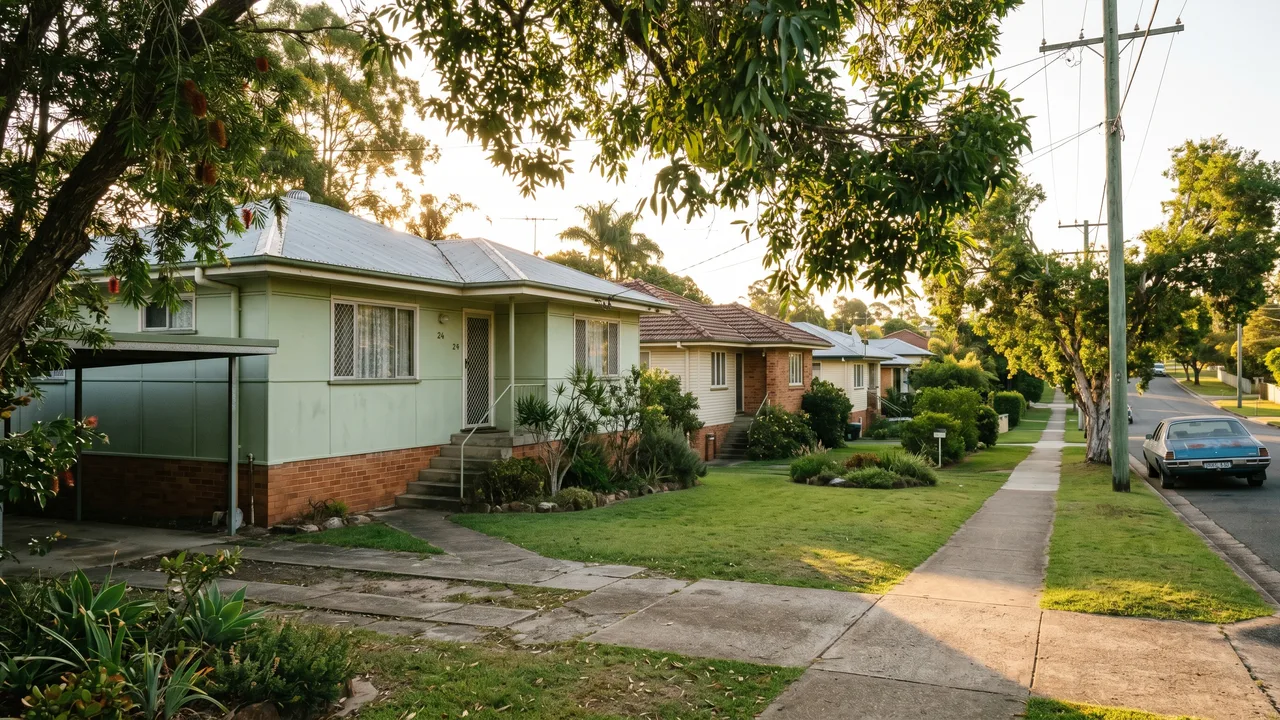
The short answer is timing and affordability. Bracken Ridge, Carseldine and Bald Hills were developed heavily between the late 1950s and the mid-1980s, which is precisely the window when fibro (fibre cement sheeting containing asbestos) was the dominant cladding and roofing material for modest family homes in south-east Queensland. When the market for those homes picked up in later decades, most buyers renovated around the fibro rather than removing it. The material is still there, often under a coat of paint or behind a deck addition, because nobody ever made it urgent enough to deal with.
The Development History That Explains Everything
Brisbane's northern corridor grew in a particular way. Inner suburbs like New Farm and Paddington had their boom earlier, in the pre-war and immediate post-war period, when timber was king. By the time developers turned their attention to what were then the outer edges of Brisbane, from roughly Carseldine north toward Bald Hills and east toward Bracken Ridge, the building industry had largely shifted to fibre cement sheeting as a cheap, fire-resistant alternative to weatherboard.
Council subdivision maps from the late 1950s and 1960s show large tracts of these suburbs broken up into quarter-acre blocks specifically for the working and lower-middle-class families that the state housing commission and private developers were targeting. The budget for those builds was tight. Fibro was cheaper per square metre than timber cladding, easier to work with than brick veneer, and widely regarded at the time as a modern, low-maintenance product.
By the time Australia banned asbestos in building products (the final ban on chrysotile came into effect in 2003), most of those homes were already 30 to 40 years old. They were paid off, handed down, or sold as affordable starter homes. The new owners were not necessarily wealthy enough, or motivated enough, to gut the exterior cladding of an otherwise functional house.
What "Fibro" Actually Means in These Homes
The word fibro gets used loosely, so it is worth being specific. In Brisbane's northern suburbs, you are most likely to encounter asbestos-containing materials (ACMs) in three forms.
Flat sheet cladding is the most common. These are the large, smooth or lightly textured panels used on the walls of the original structure. They look similar to modern fibre cement products (like Hardiflex), which creates genuine confusion for owners and buyers.
Corrugated roofing appears on older sections of properties, particularly on back additions, carports, sleep-outs and lean-tos. A significant number of Carseldine and Bald Hills homes had corrugated asbestos cement roofing on outbuildings even if the main dwelling used tiles or Colorbond.
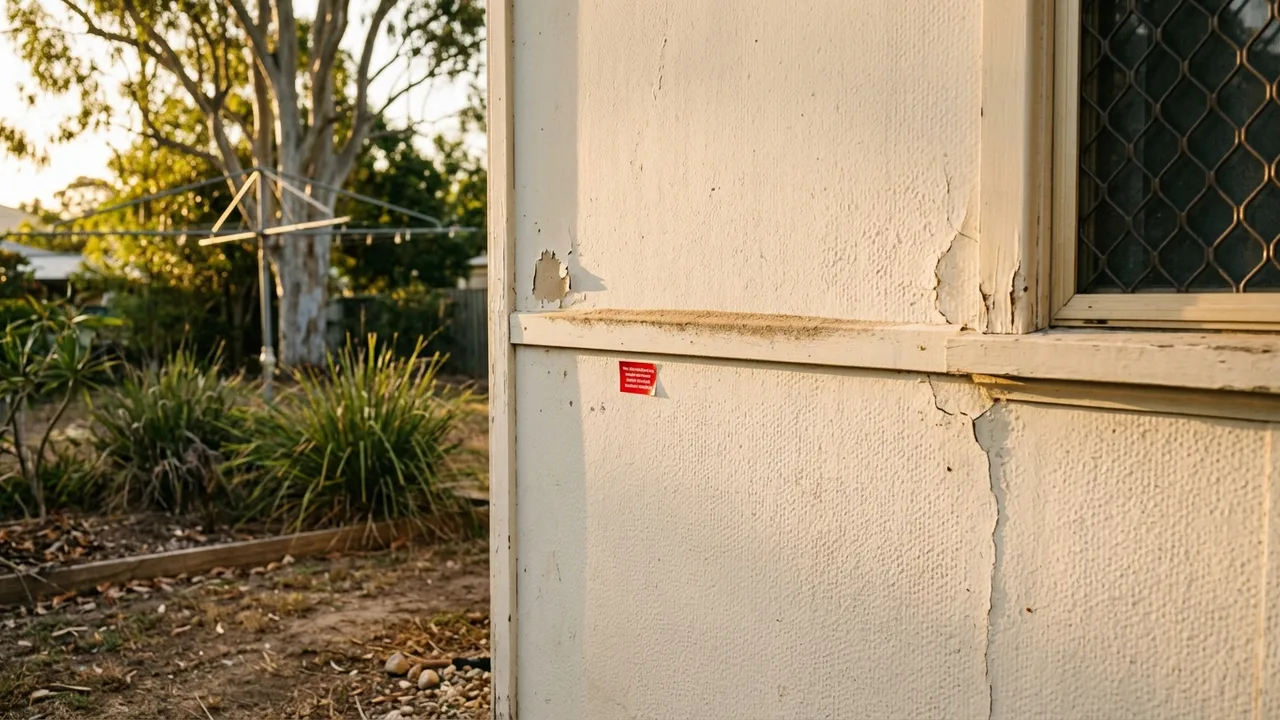
Eaves lining is often the most overlooked category. Flat sheet eaves were standard on homes built or extended through the 1960s and 1970s, and they are frequently left in place during renovation because they are not immediately visible and not structurally involved in anything the owner wants to change.
These materials are typically non-friable (bonded asbestos) when undisturbed. That means the fibres are locked into the cement matrix and do not release easily under normal conditions. The risk increases sharply when the material is cut, drilled, sanded, broken or begins to degrade with age.
Why So Many Owners Have Left It in Place
There are a few honest reasons why fibro removal has not happened more broadly in these suburbs, and none of them are reckless.
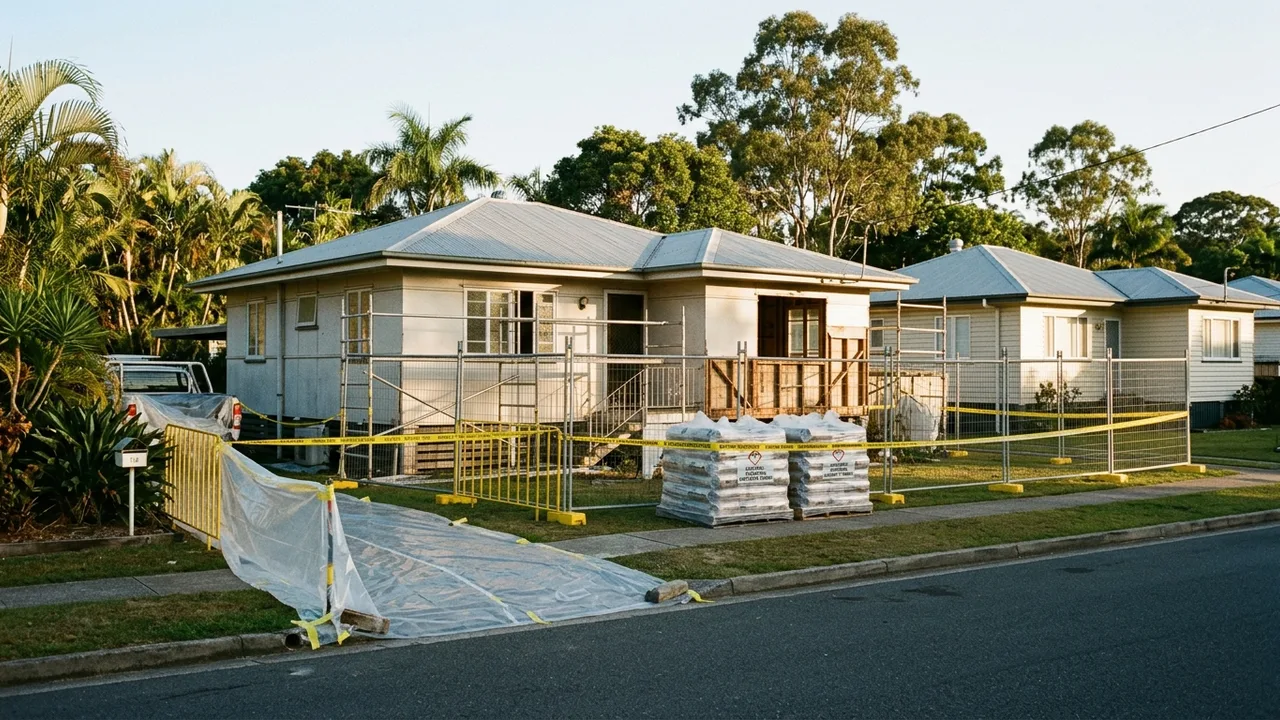
Cost is the first one. A full cladding removal and replacement on a typical Bracken Ridge fibro home can run anywhere from $8,000 to over $15,000 depending on the size of the dwelling, access conditions and what the replacement cladding is. For a family that bought the home primarily as an affordable option, that is not a trivial sum to spend on something that is not visibly broken.
Non-urgency is the second. Bonded fibro in good condition, unpainted, uncracked and undisturbed, presents low risk compared to friable asbestos (loose or crumbling material). Queensland Health and Safe Work Australia guidance is consistent on this point: intact bonded asbestos is generally safer left in place than disturbed by unqualified removal. So the rational choice for many owners has been to leave it alone.
Confusion about identification plays a role too. Older fibre cement products and newer ones look almost identical to the untrained eye. Many owners genuinely do not know whether their cladding contains asbestos. Some have been told by a previous owner or tradesperson that it was "already removed" or "non-asbestos product," and never verified that with a test.
Renovation culture is a fourth factor. The strong DIY tradition in Brisbane's outer northern suburbs has led to a lot of incremental renovation work, new bathrooms, decks, kitchen extensions, without anyone stopping to think about whether the wall being opened up or the eave being repainted actually contains asbestos.
When "Leave It Alone" Stops Being the Right Call
The non-urgency reasoning only holds while certain conditions apply. There are situations where acting becomes genuinely important.
If you are planning a renovation that involves cutting, drilling or removing any wall sheeting or eaves, you need to establish whether the material contains asbestos before any work begins. Licensed testing typically costs a few hundred dollars and takes a matter of days. That is a reasonable investment before a tradesperson starts grinding into an unknown material.
If existing sheeting shows visible cracking, flaking, surface erosion or water damage, the bonded status of the material is compromised. What was once stable starts to release fibres more readily. This is particularly relevant for older corrugated roofing on sheds and carports in these suburbs, which has had decades of UV exposure and Queensland's aggressive summer storms to contend with.
If you are selling the property, a pre-sale asbestos inspection and a clear plan for any identified materials gives buyers confidence and removes a potential negotiating lever. In Brisbane's current market, savvy buyers in the Bald Hills and Carseldine price range will often factor visible fibro into their offer.
If you have already started work and suspect you have disturbed asbestos-containing material, stop. Ventilate the area, keep others away, and contact a licensed asbestos assessor rather than attempting to clean it up yourself.
What a Practical Path Forward Looks Like
For most homeowners in Bracken Ridge, Carseldine and Bald Hills sitting on an older fibro home, the sensible sequence is roughly this.
Start with an inspection and lab-confirmed test if you have any doubt about what materials are present. An inspection gives you a register of what is where, in what condition, and what risk category it falls into. That document is useful for your own planning, for any tradespeople you bring on site and for any future sale.
If the material is confirmed as asbestos but in good, bonded condition and not scheduled for disturbance, the pragmatic choice for many owners is to monitor and manage rather than remove immediately. Keep a record, seal minor cracks with appropriate encapsulant paint if recommended by the assessor, and revisit when renovation plans change.
When removal becomes necessary, whether for a renovation, a roof replacement, or because condition has deteriorated, engage a Class B (or Class A for friable material) licensed asbestos removalist. Disposal must go to an approved facility, and a clearance certificate should be issued on completion. That certificate matters: it is your legal record that the work was done to standard.
The cost of getting this right is real, typically between $1,000 for a small shed removal and $15,000 for a full house cladding job. But it buys certainty, and certainty is what matters when you are making decisions about a place people live in.
If you want a local assessor or removalist who works across the Albany Creek, Bracken Ridge and Carseldine area, we can point you toward licensed operators we have referred work to before. That is all we do, no obligation, no pressure.
Quick answers