Asbestos Removal guide
Does My Albany Creek Home Contain Asbestos?
Does My Albany Creek Home Contain Asbestos?
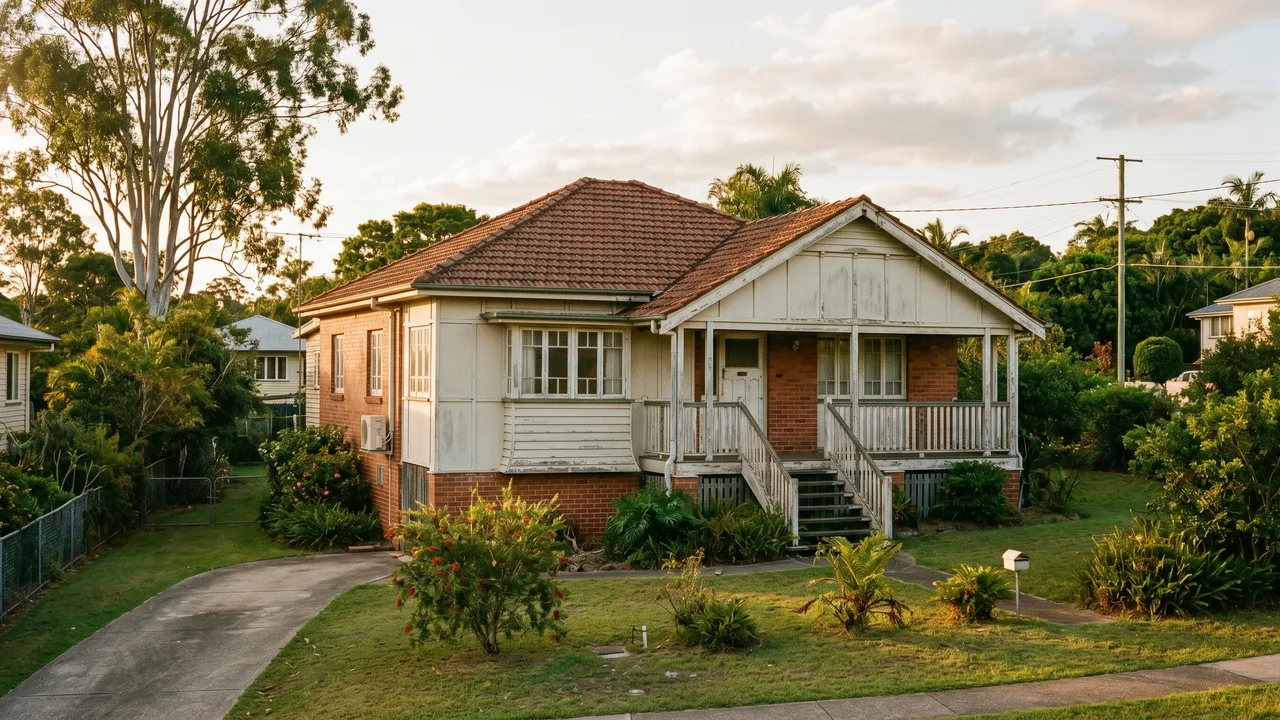
If your Albany Creek home was built before 1990, there is a real chance it contains asbestos somewhere. If it was built before 1976, the odds are considerably higher. Australia was one of the world's heaviest users of asbestos-containing materials (ACMs) per capita, and the northern Brisbane suburbs, including Albany Creek, Bald Hills, Carseldine and Bracken Ridge, were heavily developed during exactly those decades.
That is not a reason to panic. It is a reason to know the facts.
When Was Asbestos Used in Australian Homes?
Asbestos fibres were mixed into building products in Australia from roughly the 1920s through to 1987, when the most common products were phased out. A full national ban on the manufacture, use and import of asbestos did not come into force until 31 December 2003.
As a rough guide:
- Built before 1976: High likelihood of ACMs in multiple locations.
- Built 1976 to 1987: Likely to contain at least some ACMs, particularly in roofing, eaves and wet areas.
- Built 1987 to 2003: Lower risk, but some products containing asbestos were still legally available. Worth checking if you are doing any renovation work.
- Built after 2003: Effectively zero risk from original materials, though imported products have occasionally been found to contain asbestos since the ban.
Albany Creek was developed substantially during the 1970s and 1980s, so a significant proportion of homes in the suburb fall into the moderate-to-high risk categories above. The same applies to nearby Ferny Grove, Bald Hills and Carseldine.
Where Is Asbestos Typically Hidden in a House?
The tricky thing about ACMs is that they were used in dozens of products, not just the obvious ones like roof sheeting. Asbestos was prized because it was cheap, fire-resistant, durable and easy to work with. Builders used it everywhere.
Common locations in Brisbane homes of that era include:
- Roof sheeting and ridge capping - fibro (asbestos cement) roofs were extremely popular in Queensland. If your roof has a flat or low-pitched corrugated sheet appearance and has never been replaced, it may well be fibro.
- Eaves lining - the flat sheets under your roofline are a classic location.
- External wall cladding - fibro was used as an alternative to weatherboard on many Brisbane homes.
- Internal wall linings and ceilings - particularly in wet areas like bathrooms, laundries and kitchens.
- Floor tiles and the adhesive (mastic) beneath them - vinyl floor tiles from the 1960s and 70s frequently contained asbestos, and the black mastic used to glue them down often did too.
- Carpet underlay - less common, but recorded.
- Textured paint and stippled ceilings - some textured coatings from the 1970s contained asbestos.
- Insulation around hot water pipes and heating ducts - more common in commercial buildings but not unheard of in residential properties.
- Shed and garage sheeting - outbuildings were often clad with fibro well into the 1980s.
If your property has a shed or freestanding garage that predates 1990, that structure deserves as much attention as the house itself.
What Does Asbestos Look Like? (And Why You Cannot Tell by Looking)
Here is an honest answer: you cannot identify asbestos by looking at it. Fibro sheeting looks like any other compressed fibre cement board. Floor tiles look like floor tiles. The fibres that cause disease are microscopic.
Some rough visual clues can suggest a material is worth testing:
- Flat, grey sheeting with a slightly chalky surface on eaves or external walls.
- Corrugated roofing that was not installed recently and has a dull, weathered finish.
- Vinyl floor tiles in 9-inch or 12-inch squares (roughly 22 cm or 30 cm), often in a speckled or marbled pattern.
- Ceiling tiles with a fibrous texture.
But these are clues, not confirmation. The only reliable way to confirm asbestos is laboratory testing of a physical sample, analysed under polarised light microscopy. Some inspectors also use scanning electron microscopy for more detailed results.
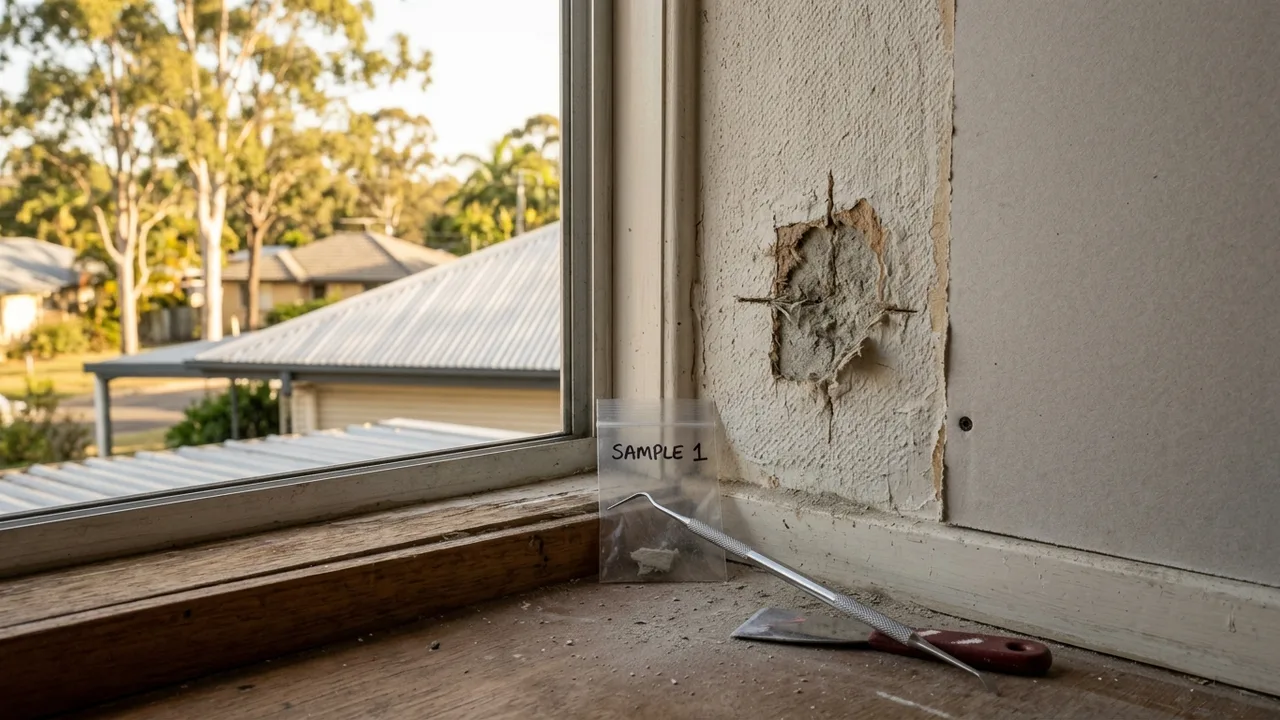
Do not cut, drill, sand or scrape a material you suspect might contain asbestos in order to collect a sample yourself. Disturbing asbestos is precisely what releases the fibres into the air. A licensed asbestos assessor knows how to collect samples safely and with minimum disturbance.
Is Asbestos in My Home Actually Dangerous Right Now?
This is where a lot of confusion comes from. The short answer is: asbestos in good condition that is not being disturbed poses very low risk. The fibres only become dangerous when they are airborne and inhaled over time.
Asbestos materials are classified in two broad categories:
- Non-friable (bonded) ACMs: The asbestos fibres are locked into a solid matrix, such as cement. Fibro sheeting on walls and eaves is typically non-friable when intact. It is relatively stable unless cut, drilled or broken.
- Friable ACMs: The material can be crumbled by hand pressure alone, releasing fibres easily. Pipe lagging, some old insulation products and badly deteriorated sheeting can be friable. This category carries significantly higher risk and requires Class A licensed contractors to remove.
An intact fibro eave in a Bracken Ridge home is a different situation from crumbling pipe lagging in a 1960s bathroom renovation. The first can often be managed in place with appropriate monitoring; the second needs professional removal before any work proceeds.
That said, "intact today" does not mean "intact after the next hailstorm or renovation quote". Knowing what you have means you can make informed decisions.
Getting Your Albany Creek Home Tested and Assessed
If you are planning any renovation, selling the property, or simply want to know what you are dealing with, a professional asbestos inspection makes sense. Here is what that typically involves:
- Visual inspection by a licensed asbestos assessor, who walks the property systematically and identifies all materials suspected of containing asbestos.
- Sample collection from suspect materials, done in a controlled way to minimise disturbance.
- Laboratory analysis, usually with results in two to five business days.
- A written asbestos register or report listing confirmed ACMs, their condition, location and a recommended management or removal action.
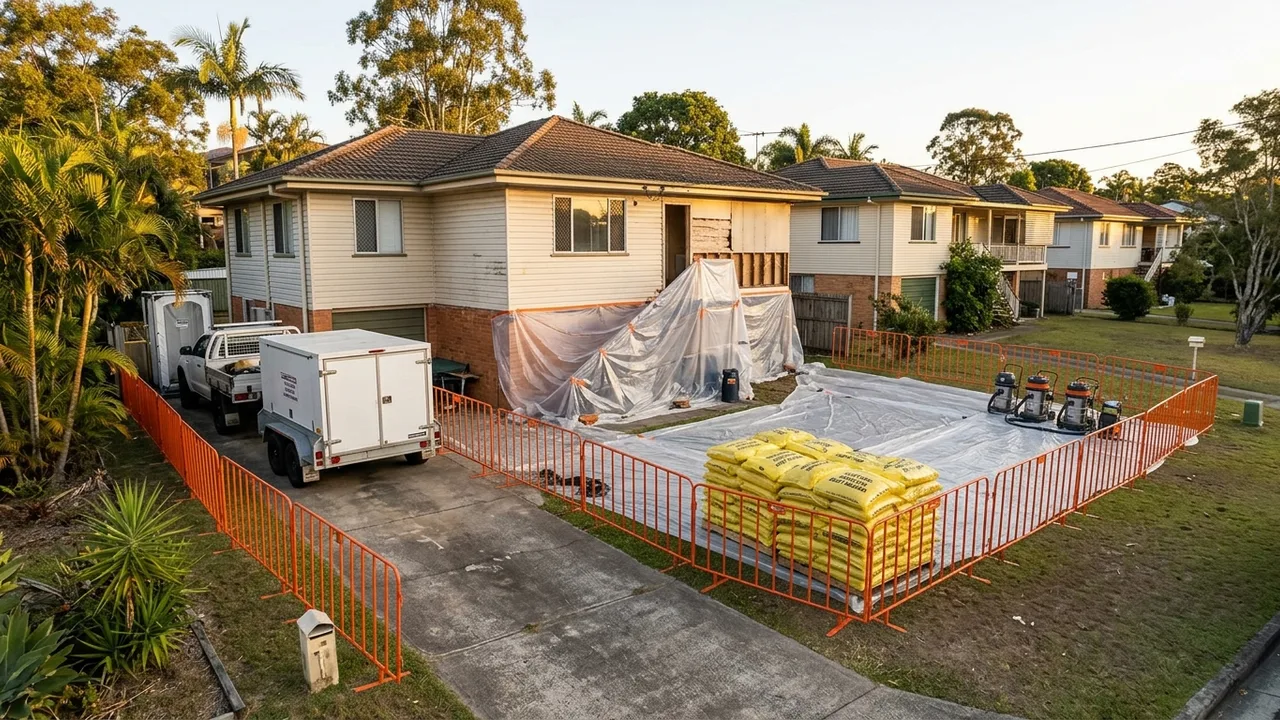
In Queensland, anyone removing more than 10 square metres of non-friable asbestos must hold a Class B removalist licence. Friable asbestos removal of any quantity requires a Class A licence. These are not suggestions; they are legal requirements under the Work Health and Safety Regulation 2011 (Qld).
Rough cost context: A residential inspection with lab testing typically costs somewhere in the range of $300 to $700 depending on property size and the number of samples. Removal costs vary considerably: a straightforward fibro eave replacement might sit in the $1,000 to $3,000 range, while a full asbestos cement roof removal on a large Albany Creek home could reach $8,000 to $15,000 or more, depending on complexity and what the replacement roofing involves.
A clearance certificate issued after removal is not just a formality. It is the documentation that confirms the work was completed correctly, and it protects you if you ever sell the property or apply for development approval.
What to Do Next
If your home was built before 1987, the most useful thing you can do is organise a professional inspection before you start any renovation work or before you list the property for sale. Trying to save money by skipping that step can cost significantly more if asbestos is discovered mid-renovation, or if a buyer's building inspector flags undisclosed ACMs late in a sale.
If you are not planning any work and the structure looks sound, there is no immediate emergency. Monitor any fibro surfaces for cracking, chalking or deterioration, and keep records of what is in the house. That is responsible management, not avoidance.
If you have already disturbed a material you suspect was asbestos, stop work, limit access to the area, and call a licensed assessor before continuing.
Finding out what is in your home is not the same as having a problem. It is just knowing what you are working with, and that puts you in a much better position than not knowing.
If you would like help connecting with a licensed asbestos inspector or removalist serving Albany Creek, Carseldine, Ferny Grove and the surrounding suburbs, feel free to get in touch. We will point you toward a vetted local operator, with no pressure and no obligation.
Quick answers