Asbestos Removal guide
Can You Remove Asbestos Yourself in Queensland?
Can You Remove Asbestos Yourself in Queensland?
The short answer is: sometimes, but within strict limits. Queensland law allows a homeowner to remove a small amount of non-friable asbestos themselves, but anything beyond that threshold requires a licensed contractor. Get it wrong and you are looking at serious health risks, fines, and potential problems when you sell the property.
Here is what you actually need to know before you touch anything.
What Queensland Law Actually Says
Under the Work Health and Safety Regulation 2011 (Queensland), a homeowner can remove up to 10 square metres of non-friable asbestos from their own residential property without a licence. That is the legal ceiling for DIY removal in Queensland.
A few important conditions sit around that rule:
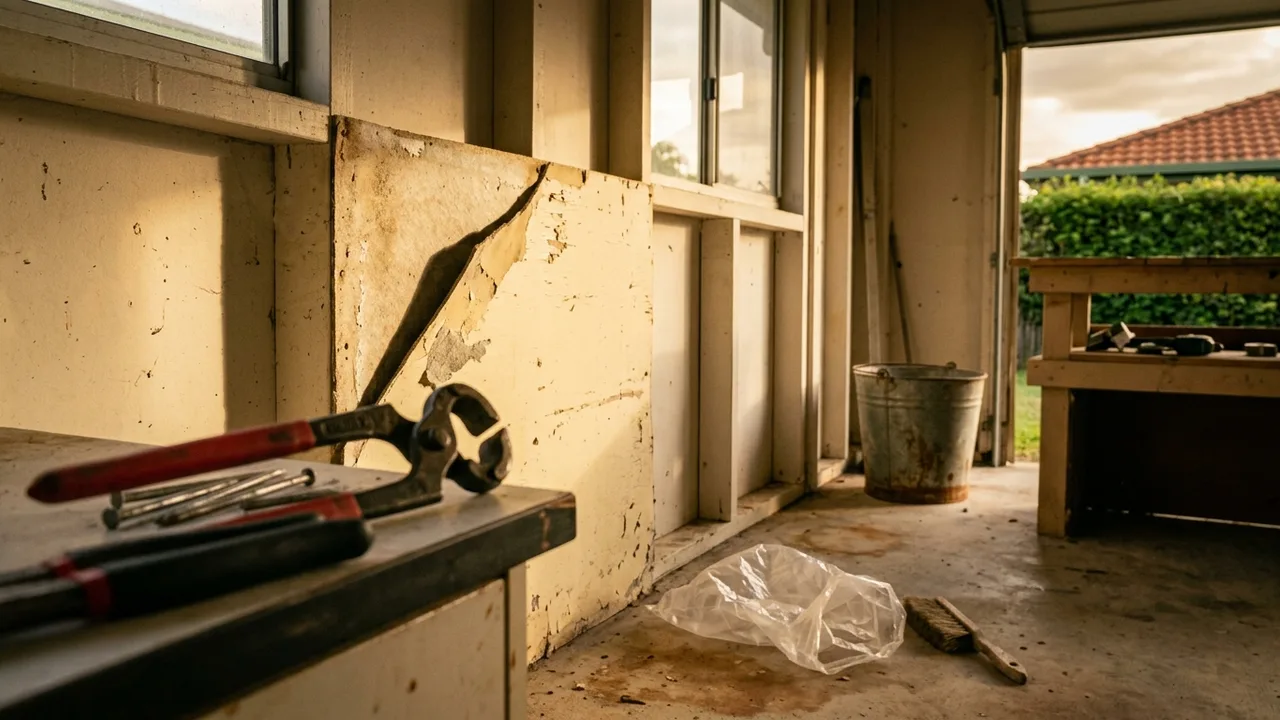
- The material must be non-friable. That means it is bonded and solid, like asbestos cement (fibro) sheeting, not crumbling or powdery.
- You must be the owner-occupier. You cannot do unlicensed removal on a rental property you own.
- You still have to follow safe work procedures, use the correct personal protective equipment (PPE), and dispose of the material at an approved facility.
- The work must not disturb the asbestos more than necessary.
Ten square metres sounds like a reasonable patch, but in practice it disappears fast. A single sheet of standard fibro is roughly 2.4 m x 1.2 m, so about 2.9 square metres. Three or four sheets and you are approaching the limit. A small shed wall or a bathroom soffit can easily exceed 10 m² once you measure it honestly.
Friable vs Non-Friable: Why the Distinction Matters So Much
This is the line that separates inconvenient from genuinely dangerous.
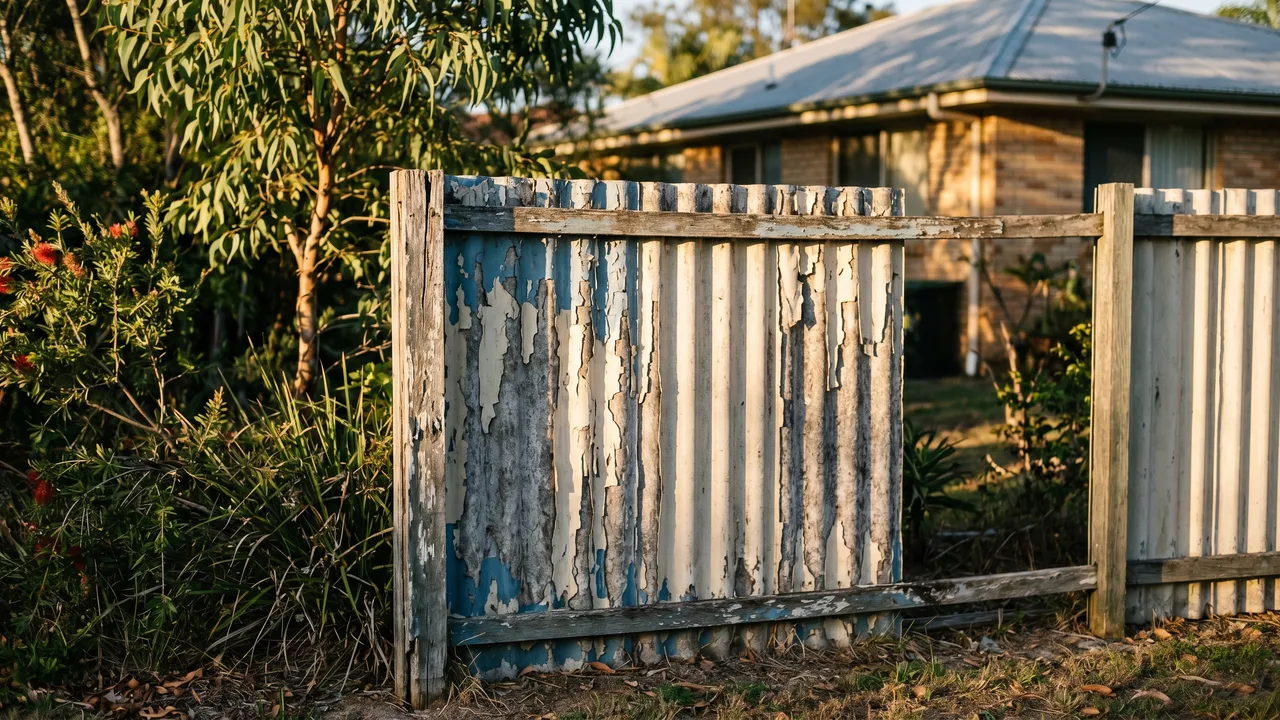
Non-friable asbestos is asbestos fibres locked into a solid matrix, typically cement. Think fibro cladding on an old Queenslander, corrugated roofing sheets, eaves lining, or flat sheeting inside a laundry. When the material is in good condition and handled carefully, the fibre release is relatively low.
Friable asbestos crumbles when dry pressure is applied. Pipe lagging, some old insulation, backing material behind floor tiles, and spray-on fire protection coatings can all be friable. Disturbing friable asbestos releases fibres easily into the air, and airborne fibres are the hazard. Mesothelioma and asbestosis result from inhaling those fibres over time, sometimes decades later.
Queensland law requires a Class A licence for any friable asbestos removal. A Class B licence covers non-friable work commercially. Homeowners doing their own small removal sit outside the licensing framework entirely, which is why staying genuinely under 10 m² and confirming the material is non-friable matters so much.
If you are not certain whether your material is friable, stop. Do not prod it, scrape it, or try to break off a small piece to check. Get it tested first.
The Specific Risk Picture for Albany Creek and Surrounding Suburbs
Homes built before 1990 right across northern Brisbane, from Ferny Grove through Albany Creek, Carseldine, and out to Bracken Ridge and Sandgate, have a realistic chance of containing asbestos cement products somewhere. The Queenslander and post-war fibro cottage were the dominant housing types through the 1950s, 60s, and 70s, and asbestos cement was the go-to sheet material for almost everything: walls, ceilings, eaves, wet area lining, fencing.
A few patterns are worth knowing for this part of Brisbane:
- Bayside suburbs (Sandgate, Brighton, Boondall) sometimes show accelerated weathering on older fibro sheets due to salt air and humidity. Weathered fibro is more porous and can release fibres more readily when disturbed.
- Ferny Grove and Albany Creek properties often have older garages and sheds out the back, frequently clad in corrugated asbestos cement roofing, that have never been renovated and are now in poor condition.
- Carseldine and Bald Hills saw a lot of 1970s development, meaning plenty of homes with original fibro eaves lining and internal wet area sheeting still intact.
None of this is unique to these suburbs, but it is worth factoring into your thinking about what you might be dealing with before you start a renovation.
Testing Before You Do Anything
If your home was built before 1990 and you have not had it inspected, do not assume materials are safe because they look solid. Asbestos cement looks like ordinary cement sheeting. You cannot identify it by sight reliably.
A professional asbestos inspection and lab-confirmed test typically costs somewhere between $200 and $600 for a residential property, depending on how many samples need to go to the lab and the scope of the inspection. That is money well spent before you start cutting, drilling, or demolishing anything.
You can buy sampling kits and send samples to a lab yourself, but the risk of disturbing the material while sampling without proper PPE and technique is real. A licensed inspector knows how to collect samples safely and document what they find in a way that is usable if you later need to sell or renovate with council approval.
What DIY Removal Actually Involves (and Where It Gets Complicated)
If you have confirmed you have non-friable asbestos, your total area is genuinely under 10 m², and you want to proceed yourself, here is the honest picture of what that involves.
Equipment you will need:
- A P2 disposable respirator (not a dust mask, not a cloth face covering)
- Disposable coveralls, gloves, and boot covers
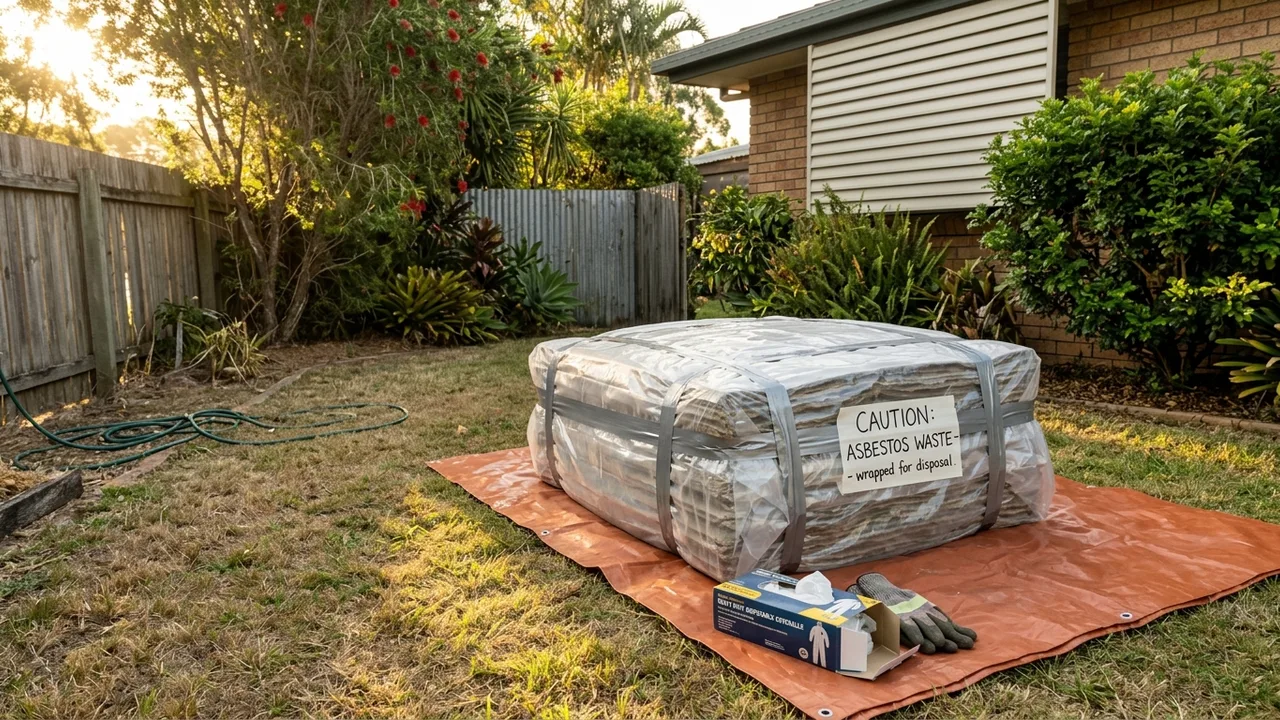
- Heavy-duty plastic sheeting to seal the work area and wrap the removed material
- Asbestos warning labels and tape rated for asbestos waste
- Wet rags and a low-pressure water spray to suppress dust during removal
Procedure basics:
Wet the material before and during removal. Work slowly. Do not use power tools that generate dust, including angle grinders, circular saws, or drills. Score and snap where possible. Keep sheets whole rather than breaking them.
Disposal:
This is where DIY often trips people up. You cannot put asbestos in the general bin, and you cannot take it to a standard transfer station. In Brisbane, asbestos waste must go to an approved disposal facility. Some council transfer stations accept small residential loads (typically bagged and labelled correctly), but ring ahead to confirm current procedures because this changes. There is usually a fee of around $50 to $150 for a small load.
You will not receive a clearance certificate for DIY work. A clearance certificate (sometimes called an inspection report post-removal) is issued by a licensed assessor and confirms the area is clear of asbestos fibre. If you ever sell the property or need to demonstrate compliance for a renovation permit, you will want one. That typically means calling a professional even if the removal itself was done by the homeowner.
When to Stop Thinking DIY and Call Someone Licensed
Be honest with yourself here. The 10 m² rule is a ceiling, not an invitation to work up to it.
Call a licensed contractor if any of these apply:
- The total area is over 10 m², even by a little. Underestimating is easy and common.
- You are not certain whether the material is friable.
- The material is in poor condition (cracked, crumbling, peeling, or water-damaged).
- The removal involves a roof, which is inherently awkward and adds fall risk on top of asbestos risk.
- You are planning to sell and need a clearance certificate.
- There are other people in the home, particularly children or anyone with a respiratory condition.
- You are simply not comfortable doing it, and that is a completely valid reason.
Licensed residential asbestos removal in Brisbane typically runs from around $1,000 for a small job to $8,000 or more for a full roof or large area, depending on access, tipping costs, and whether replacement work is included. It is not cheap. But for anything beyond a patch of solid, intact sheeting in a well-ventilated outdoor spot, the professional option is usually the sensible one.
A Straightforward Recommendation
The Queensland 10 m² DIY allowance exists, and it is reasonable for a small, clearly non-friable job. But the conditions around it are easy to misread, and the consequences of getting it wrong are not minor. If you are unsure about the material, the area, or your ability to dispose of it correctly, have a licensed inspector look first. That single step makes every subsequent decision much clearer.
If you want to talk through what you have found in your Albany Creek or northern Brisbane home and get connected with a vetted local contractor, you are welcome to get in touch. There is no obligation, and sometimes a brief conversation about what you are looking at is enough to point you in the right direction.
Quick answers