Asbestos Removal guide
Can Asbestos End Up in Your Garden Soil in Brisbane?
Yes, It Can Happen
Asbestos can absolutely end up in garden soil in Brisbane, and it happens more often than most homeowners realise. The most common route is not dramatic - it is usually the slow breakdown of asbestos cement (AC) sheeting used in fences, outbuildings or eaves, combined with decades of weathering, digging and landscaping work that disturbs fragments and mixes them into the top soil layer.
If your home was built before 1990, this is worth taking seriously, not with panic, but with clear-headed awareness of how the risk actually works.
How Asbestos Gets Into Garden Soil
Asbestos does not wander into your garden on its own. There are a handful of specific pathways that are worth knowing.
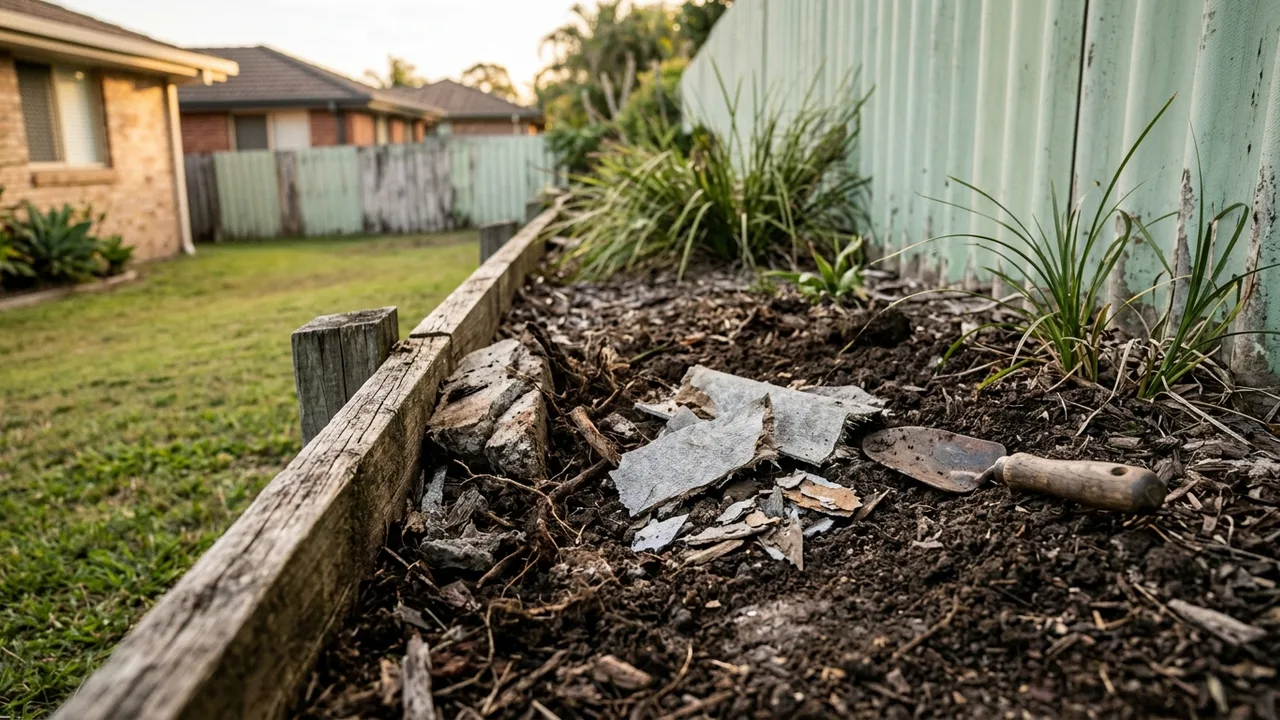
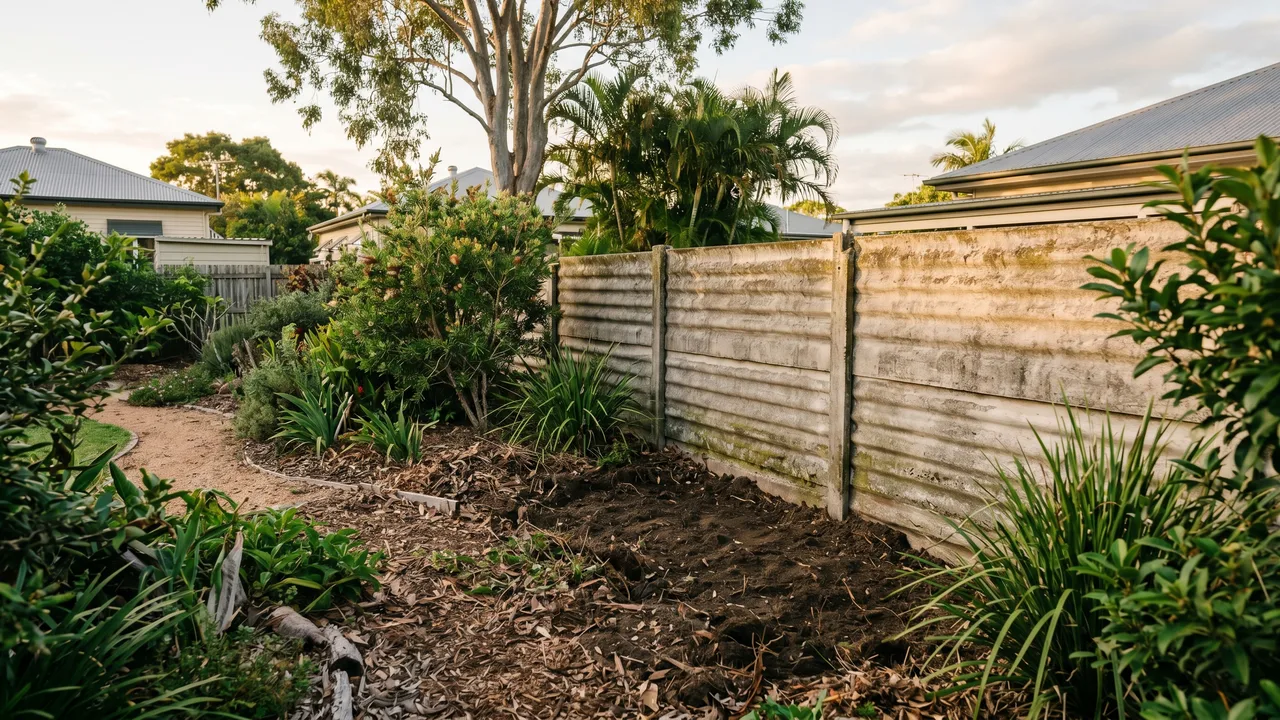
Deteriorating fences and sheeting. Fibrous cement fencing was common across Brisbane's northern suburbs, including Albany Creek, Bald Hills, Carseldine and Bracken Ridge, through the 1960s to the mid-1980s. As sheets age, surface fibres can erode with rain and UV exposure. Small fragments break off and fall directly into garden beds along the fence line.
Renovation and demolition debris. Older homes often have buried rubble from past extensions, shed demolitions or bathroom strip-outs. If any of that material contained AC sheeting, fragments may have been buried rather than disposed of properly. This was not unusual before asbestos awareness became mainstream.
Imported fill and soil. This one surprises people. Contaminated fill has historically been moved around Brisbane construction sites. If someone brought in topsoil or fill from a site where asbestos materials had been ground up or mixed in, that soil could carry fragments. It is a less common pathway, but it has occurred.
Stormwater and surface wash. Rooflines and eaves made from asbestos cement can shed fine particles during heavy rain. Over years, runoff can carry those particles into garden beds below the drip line. Bayside suburbs like Sandgate, Brighton and Boondall get more salt-air weathering, which can accelerate surface degradation of AC materials faster than inland sites.
What the Risk Actually Looks Like
It is worth being honest here rather than vague. The risk from asbestos in garden soil depends heavily on the form it takes.
Bonded asbestos (asbestos fibres locked into a cement matrix) in soil is considered lower risk than friable asbestos, which crumbles easily and releases loose fibres. A buried chunk of old fence sheeting in your garden is genuinely different from powdered or friable material. Both warrant professional assessment, but they are not the same situation.
The hazard arises when fibres become airborne. That can happen when you dig, rotary-hoe, aerate or rake. Dry conditions make it worse. Brisbane summers are long and dry enough that soil disturbance can generate dust in ways that cooler, wetter climates might not.
Children playing in garden beds, bare feet in dirt and outdoor food gardens all raise the stakes. If you grow vegetables, herbs or leafy greens in beds near old fencing or a demolished structure, that is the most practical reason to get the soil checked.
How to Tell If Your Soil Might Be Affected
You cannot identify asbestos fibres visually in soil with any certainty. Fragments of AC sheeting can look like small pieces of grey concrete or compressed material. They can also be too fine to see at all.
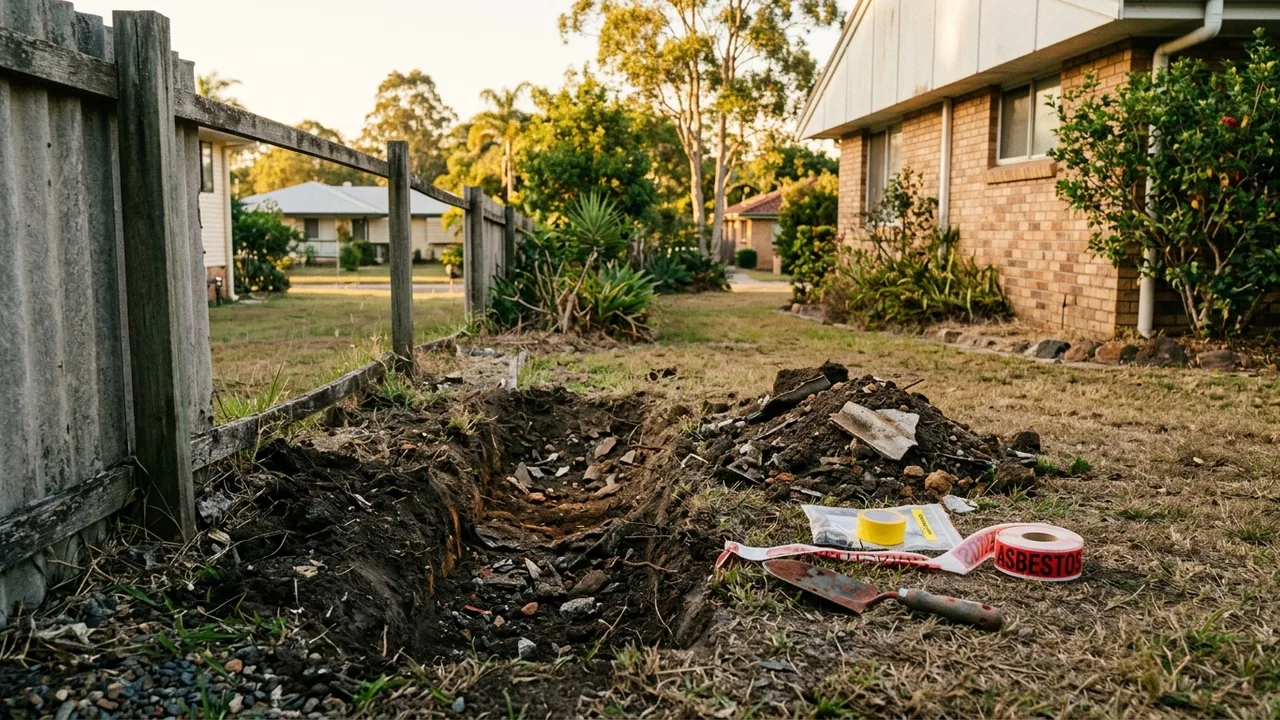
Some signs that suggest a higher probability of contamination:
- Grey or bluish-grey fibrous fragments visible in the soil, especially near old fence lines or demolished structures
- A previous fence, shed or outhouse that was demolished on site (rather than taken away intact)
- A home built before 1990 with original eaves, roofing or fencing still in place or recently removed
- Imported fill that arrived without documentation of source
If any of these apply, the appropriate step is soil sampling by a licensed asbestos assessor, not a DIY test kit. Laboratory analysis can identify and quantify asbestos fibres in soil samples. In most Brisbane assessments, a basic soil test through a licensed assessor and accredited lab typically runs somewhere in the range of a few hundred dollars for a small residential site, though costs vary with the number of sample locations and the lab used.
What You Should Not Do
A few common instincts turn out to be counterproductive.
Do not dry-sweep or blow debris near areas where you suspect AC materials. This is exactly the action most likely to suspend fibres in air. Use damp methods if you need to clear an area before assessment.
Do not rotary-hoe or heavily aerate soil in a suspect area before getting it tested. If contamination is present, that significantly increases fibre release.
Do not attempt to dispose of contaminated soil yourself. In Queensland, soil containing asbestos is classified as hazardous waste. Disposal requires a licensed contractor and an approved facility. Taking a bag of suspect soil to a standard tip or skip is both illegal and genuinely risky to other people.
Do not assume that because the material looks intact, it is safe to leave alone indefinitely. Bonded asbestos in soil does not degrade and disappear - it stays there and can be disturbed again in future.
What a Professional Assessment Involves
A licensed asbestos assessor will typically walk the site, identify likely source materials, and take soil samples from relevant areas. Samples go to an accredited laboratory for analysis, usually under polarised light microscopy (PLM) or phase contrast microscopy (PCM), depending on what is being looked for.
If the results confirm contamination, the scope of remediation depends on how widespread it is and what form the asbestos takes. Localised contamination near a single fence line is very different from site-wide fill contamination.
Remediation options typically include:
- Excavation and removal of contaminated soil to a licensed disposal facility
- Encapsulation in lower-risk situations, where the contaminated layer is buried under clean fill and hard landscaping (this is less commonly appropriate for residential gardens with ongoing digging activity)
- Clearance certificate issued once the work passes air monitoring and visual inspection
In Queensland, friable asbestos removal and any large-scale soil remediation must be handled by a Class A licensed asbestos removalist. For bonded asbestos in small quantities, a Class B licence may be sufficient, but the line between the two is not always obvious from the surface. A good assessor will advise on licence requirements before any work begins.
A Practical Starting Point for Brisbane Homeowners
If you are in Albany Creek, Carseldine, Bald Hills or any of the surrounding suburbs and your property has pre-1990 structures, a reasonable first step is just to look. Walk along your fence line. Check what the eaves of your shed are made from. Look at any areas where rubble may have been buried.
You are not trying to diagnose asbestos from a visual inspection - that is not possible. What you are doing is asking yourself whether the history of your site creates a plausible pathway for contamination to exist.
If the answer is yes, even a tentative yes, then a professional soil assessment is the proportionate response. It is not an overreaction. It is the kind of thing a careful homeowner does before putting in a new vegetable garden or letting small children play regularly in a particular patch of ground.
The cost of a soil test is small relative to the cost of remediating a contaminated site later, or relative to not knowing what your family is digging in every weekend.
If you would like to connect with a licensed asbestos assessor covering Albany Creek, Bracken Ridge, Sandgate and the surrounding suburbs, this service can help with that - give us a call and we can point you to someone appropriate for your situation.
Quick answers