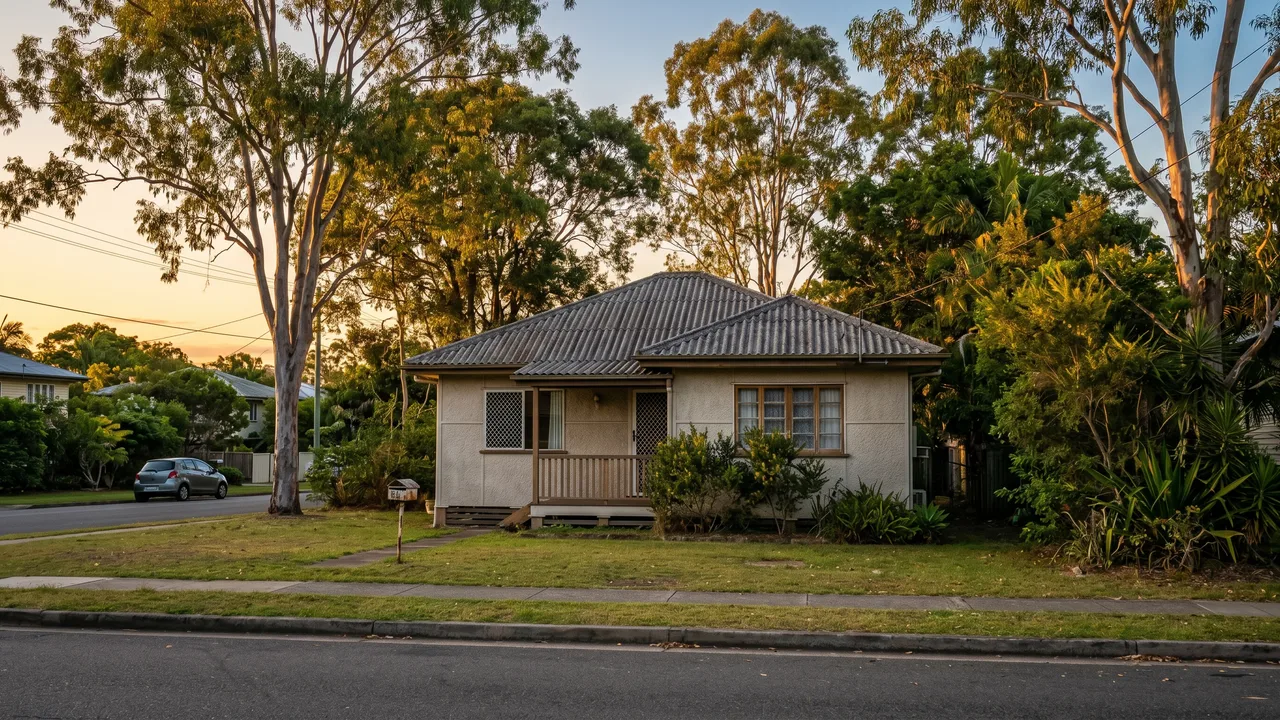
Asbestos Removal guide
What to Expect When Your Asbestos Roof Is Removed and Replaced
What Actually Happens on the Day (and the Days Around It)
Removing an asbestos roof and replacing it is a two-stage project, not one. The asbestos removal contractor handles the first stage under strict licensing conditions. A roofing contractor then handles the second. Sometimes the same company coordinates both; often they don't. Either way, knowing the sequence stops you getting caught off-guard.
Here's a straightforward run-through of the whole process, from the inspection that kicks it off to the clearance certificate that closes it out.
Getting the Diagnosis Right First
Before anyone touches your roof, you need confirmation that it actually contains asbestos. That sounds obvious, but plenty of homeowners in older suburbs around Albany Creek, Bald Hills and Carseldine have assumed their corrugated or flat cement sheeting is asbestos-containing material (ACM) without ever having it tested. Sometimes they're right. Occasionally they're not.
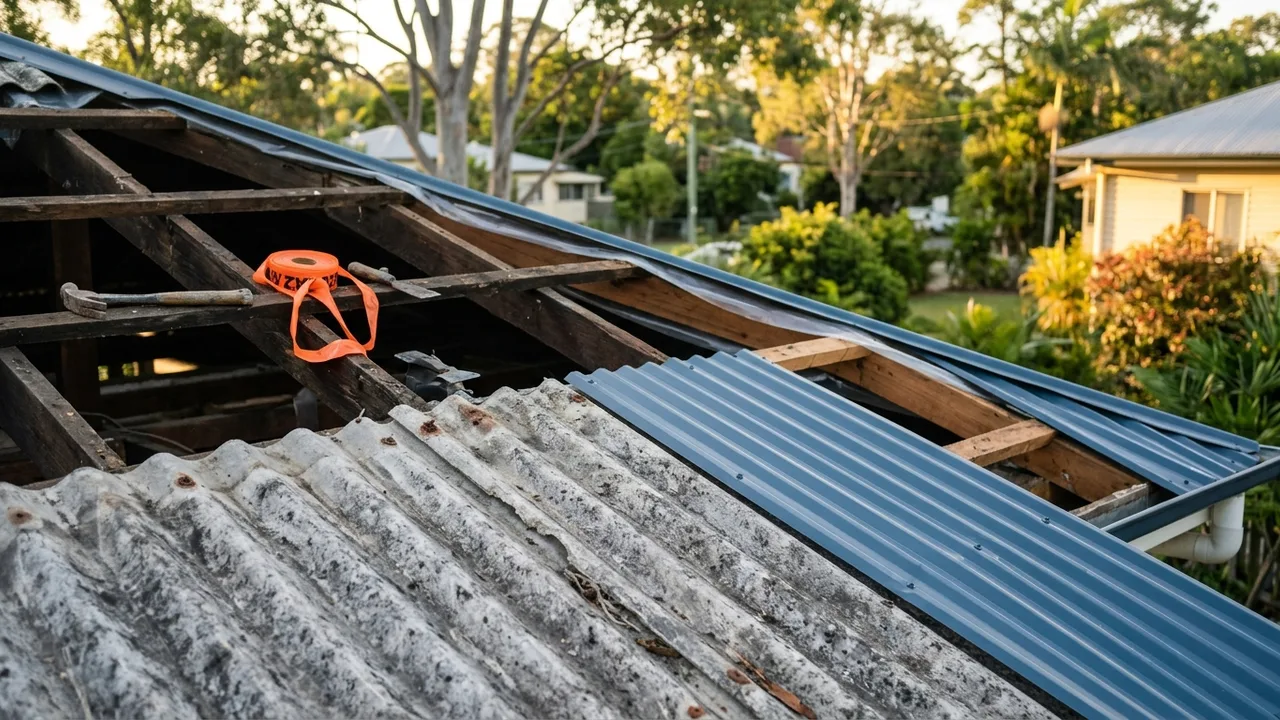
A licensed asbestos assessor takes a small sample of the roofing material and sends it to an accredited laboratory. Results typically come back within a few days. The test confirms whether chrysotile (white asbestos) or another fibre type is present, and at what concentration.
Why does this matter? Because if you skip the test and proceed anyway, you could be paying for Class B licensed removal on material that didn't require it. Or, worse, you could start work on a roof that does contain asbestos without the correct precautions in place.
If your home was built before 1990, ACM in the roof is a real possibility. Fibro and cement-sheet roofs in Brisbane's northern suburbs were common through the 1960s to mid-1980s. Post-1990 builds are generally clear, but extensions or reroofing done with older stock can complicate that assumption.
Licensing: What the Rules Actually Require
In Queensland, asbestos removal work above 10 square metres must be carried out by a licensed removalist. For most residential roofs, that means a Class B licence at minimum. If the material is friable (crumbling, loose, or damaged to the point where fibres can become airborne easily), Class A licensing is required instead. Class A is a higher certification with stricter controls.
A standard asbestos cement roof that's intact and not powdering is typically non-friable and falls under Class B. But a roof that's weathered, cracked, or has been partially drilled is a different matter. Your assessor will tell you which category applies.
Always ask to see the contractor's licence before work starts. In Queensland, you can verify licences through the QBCC (Queensland Building and Construction Commission) online register. This isn't about distrust; it's just standard due diligence on a job with genuine health stakes.
What Happens During the Removal
The day (or days) of removal follow a controlled sequence. Here's what typically happens on a standard residential roof job in this area:
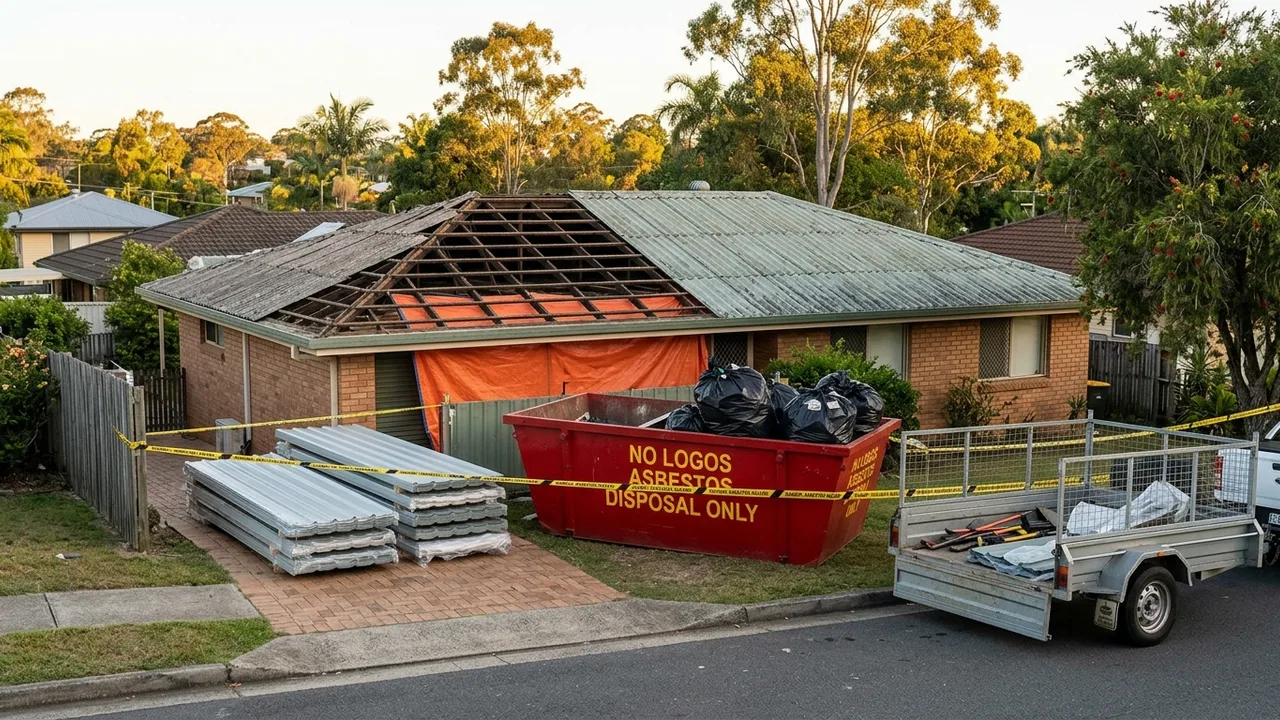
Site preparation. The contractor sets up exclusion zones around the house. Neighbours may be informally notified, particularly if you're on a smaller block common in suburbs like Sandgate or Brighton. Vehicles and furniture under or near the work zone get moved.
Wetting down. Before any sheeting is lifted, the material is wetted with a fine mist or sprayed with a diluted PVA solution. This suppresses fibres and keeps ACM from becoming friable during the work.
Careful removal. Sheets are removed whole where possible rather than broken up. Each sheet is handled to minimise dust. Workers wear full personal protective equipment (PPE) including P2 or P3 respirators, disposable coveralls, and gloves.
Double-wrapping and labelling. Removed sheets go straight into heavy-duty polythene sheeting, double-wrapped and sealed, then labelled as asbestos waste. Nothing goes into a skip or general waste.
Decontamination. Before leaving the exclusion zone, workers decontaminate using a three-stage process. Equipment and the site perimeter are cleaned down.
Air monitoring. On larger or more complex jobs, a hygienist may take air samples during and after removal. This is sometimes mandatory depending on job size and site conditions; ask your contractor whether it applies to your job.
The timeline for a typical single-storey roof in the Albany Creek or Ferny Grove area is usually one to two days for removal, depending on size and access.
Disposal and the Clearance Certificate
Asbestos waste cannot go to a general tip. Licensed contractors transport it to a Queensland EPA-approved facility. This is non-negotiable under state legislation, and any contractor offering to dispose of it another way is one to avoid.
Once the waste is removed and the site is cleaned, an independent licensed asbestos assessor (not the same person who did the removal) inspects the area and issues a clearance certificate. This document confirms the site is safe to re-enter and that no visible ACM remains.
Keep this certificate. It becomes part of your property's records and is often required when you sell. Some lenders and conveyancers in Queensland now ask for it specifically.
The Replacement Roof: Timing and Trade-offs
After clearance, your roofing contractor can start the replacement. The two most common choices for homes in this area are Colorbond steel and concrete or terracotta tiles. Here's an honest comparison for the context of Brisbane's northern suburbs:
Colorbond steel is lighter, faster to install, and handles the thermal cycling of Queensland summers well. It's the more common choice on post-war homes around Boondall and Bracken Ridge. Cost is generally lower than tiles for the installation itself, though it conducts heat more readily without good insulation beneath it.
Concrete or terracotta tiles are heavier, which means your fascias, gutters and battens need to be confirmed as adequate before tiling goes on. They hold heat longer but also provide some natural thermal mass. They're a better visual match if your home has original tile details.
Budget for the full replacement, not just the removal. A combined asbestos removal and reroofing project on a standard three-bedroom home in this part of Brisbane typically runs somewhere between $8,000 and $20,000 in total, depending on roof size, pitch, access, material choice and what the carpenter finds once the old sheets come off. Rotten battens and damaged fascias are common discoveries on roofs that have been in place for 40-plus years.
A Few Things That Catch Homeowners Off-Guard
Painted asbestos sheeting. A roof that's been painted over is not safer; the paint may actually make sampling harder and sometimes traps fibres differently during removal. It doesn't change the regulatory requirements.
Gutters and downpipes. If your gutters are original to a pre-1990 build, check whether they're fibro as well. Asbestos cement was used in guttering and downpipes too, especially in the decades when it was widely available. Your assessor should check this.
Council notification. For most residential removals in Brisbane, you don't need a separate development approval for the removal itself, but it's worth confirming with Brisbane City Council if your property is in a heritage overlay or character area. Some homes in the inner northern suburbs sit within character residential zones that affect what replacement cladding or roofing is permitted.
Neighbour access. If your roof is close to a boundary, the contractor may need to access the neighbour's property briefly. Worth a conversation before work day, not on it.
How to Approach Getting Quotes
Get at least two quotes, and make sure each one covers both stages clearly: removal, disposal, clearance certificate, and the handover point where the roofing contractor takes over. Some companies quote only on removal; others bundle everything. Compare like with like.
Ask specifically:
- Is air monitoring included, or is it an extra?
- Who arranges the clearance certificate, and is it in the quote?
- What happens if friable material is found once work starts?
That last question matters. Occasionally what looks like intact sheeting turns out to be more degraded than expected once the installer gets up close. A good contractor will tell you how they handle that scenario before you sign anything, not mid-job.
If you want a local referral to a licensed removalist in Albany Creek or the surrounding suburbs, including Bald Hills, Carseldine, Sandgate and Ferny Grove, this service connects homeowners with vetted providers who work in these postcode areas. There's no pressure; just a way to save yourself the search.
Quick answers