Asbestos Removal guide
Planning a Reno? Here Is Why Asbestos Must Be Checked First
Why Asbestos Has to Come Before the Sledgehammer
If you're planning a renovation, asbestos needs to be confirmed absent (or safely managed) before a single wall comes down. That's the short answer. The longer answer explains why skipping this step can cost you far more than the inspection itself, and in some cases, put your family's health at serious risk.
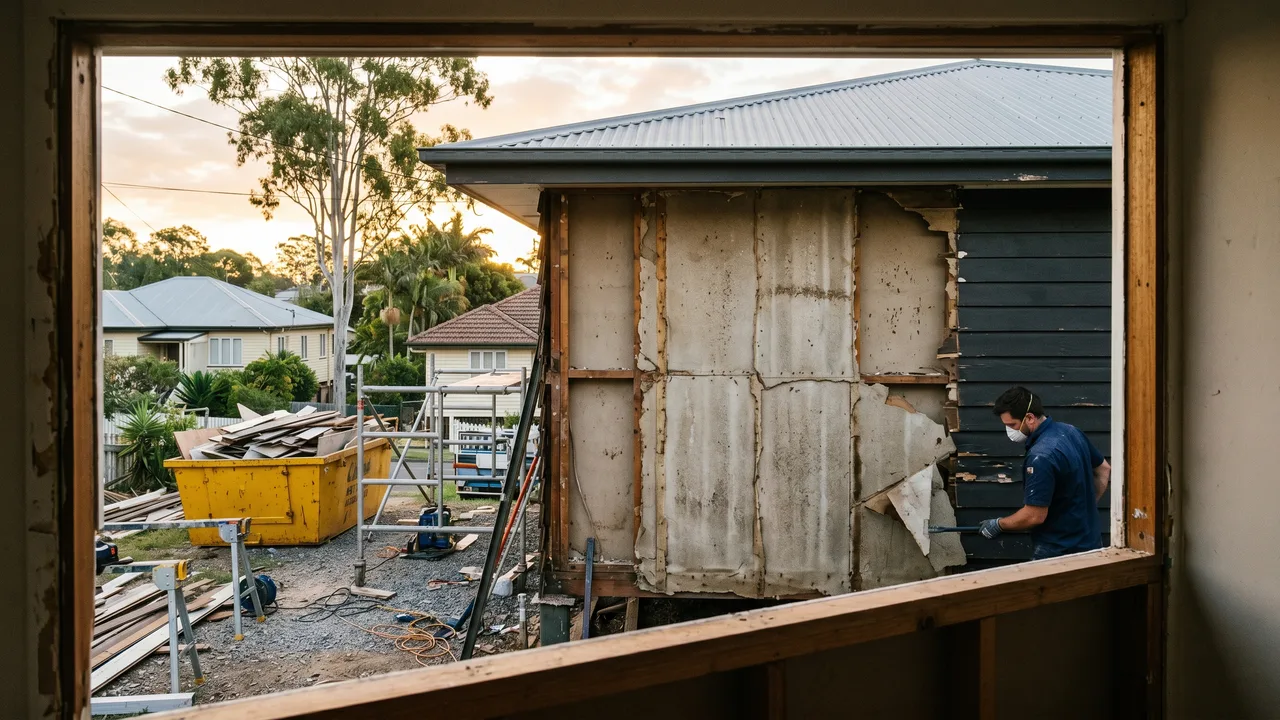
Queensland homes built before 1990 have a real chance of containing asbestos in some form. In suburbs like Albany Creek, Bald Hills, Carseldine and Bracken Ridge, the housing stock is heavily weighted toward that era. Fibro walls, corrugated cement roofing, eave linings and textured ceilings were all standard inclusions in the post-war building boom. If your home went up between the 1950s and the late 1980s, asbestos is a possibility you need to rule out, not assume away.
What "Checking First" Actually Means
Checking for asbestos is not guesswork, and it's not a visual inspection you can do reliably yourself. Asbestos-containing materials (ACMs) often look identical to non-asbestos equivalents. Fibrous cement sheeting, for example, is fibrous cement sheeting whether or not it contains chrysotile. You cannot tell the difference by looking at it, poking it or even breaking a small piece off (which you should not do anyway).
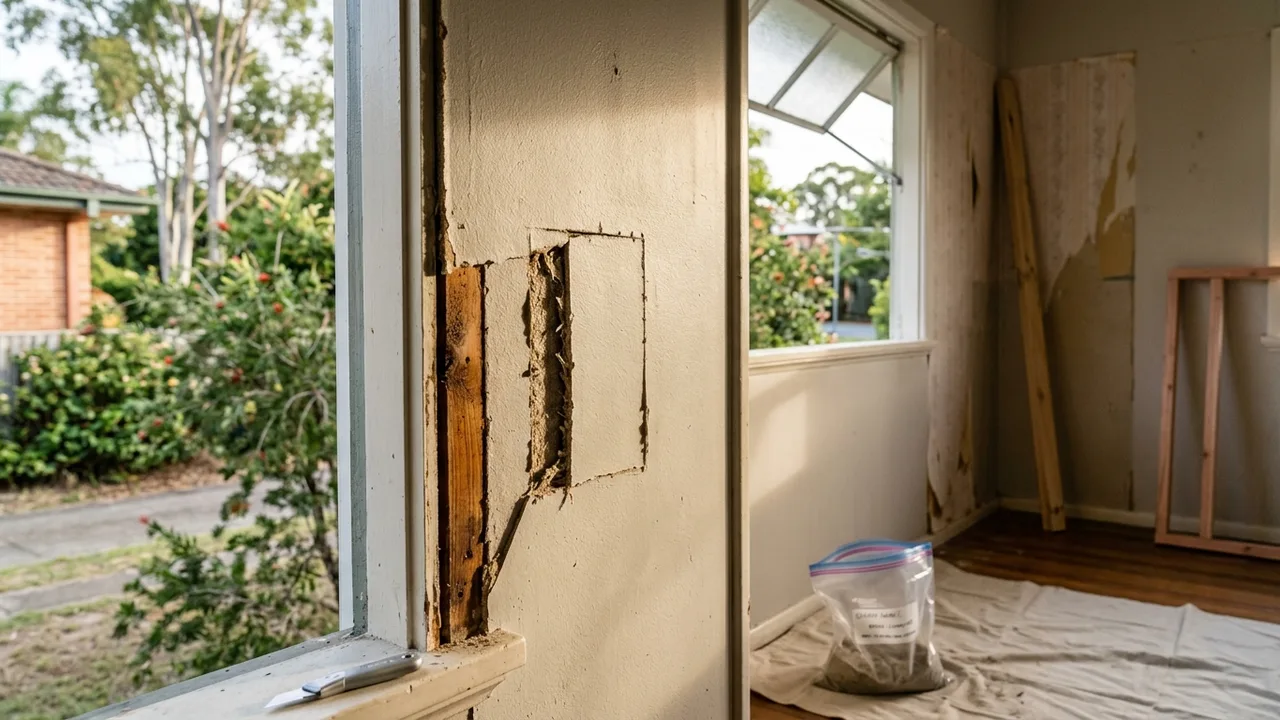
A proper check involves two steps:
- A licensed inspection. A qualified assessor visits the property, identifies materials likely to contain asbestos based on age, location and appearance, and takes samples without disturbing the material more than necessary.
- Laboratory confirmation. Samples go to a National Association of Testing Authorities (NATA) accredited lab. Results typically come back within a few business days.
Only once you have written confirmation of what is and isn't present can your builder or trades plan their work safely and legally. Without that information, a tradie who disturbs asbestos unknowingly is not just at personal risk. You could be liable for an unsafe worksite.
The Brisbane and North Side Context
Brisbane's northern suburbs carry a particular combination of risk factors worth naming specifically.
Most of the housing in Albany Creek, Ferny Grove, Sandgate and Brighton went up between the 1950s and mid-1980s, right in the middle of Australia's peak asbestos use period. Many of these homes are Queenslander-adjacent builds or early brick-and-fibro combinations, where asbestos cement sheeting (often called "fibro" colloquially) was used for eave linings, wall cladding, wet area linings and garage walls.
Sandgate and Brighton homes close to the bay sometimes have additional considerations. Salt air and moisture accelerate the weathering of cement sheeting, which can cause it to become brittle over time. Brittle or crumbling asbestos-containing material is classified as friable, and friable asbestos carries a higher risk profile and requires a Class A licensed contractor to remove it. That distinction matters because a Class B licence only covers non-friable (bonded) asbestos.
Older shed and garage structures throughout Bald Hills and Banyo are another common surprise. Asbestos cement was the go-to material for outbuildings well into the 1980s. A shed that looks like a straightforward knockdown job can become a significantly more complex (and expensive) project if ACMs are found mid-demolition.
What Happens When Asbestos Is Disturbed Without Preparation
Asbestos fibres become dangerous when they are released into the air and inhaled. A single exposure is unlikely to cause disease; it's cumulative exposure over time that is most strongly associated with conditions like mesothelioma, asbestosis and lung cancer. That said, there is no established "safe" level of asbestos fibre inhalation, which is why regulations exist.
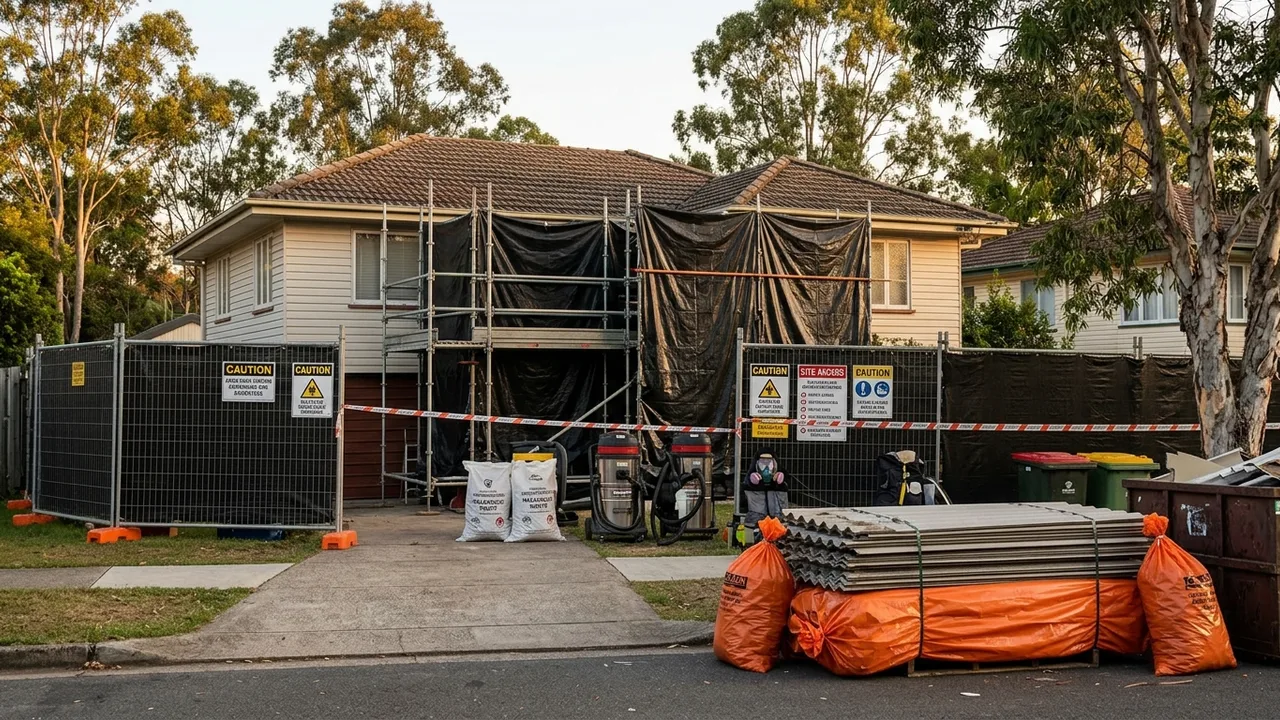
When a renovation disturbs an unidentified ACM, the practical consequences can include:
- Health risk to workers and occupants. Anyone in or near the work area during disturbance is potentially exposed.
- Contamination of the site. Fibres can settle on surfaces, in ceiling cavities and in HVAC systems. Remediation after the fact is more costly than prevention.
- Legal exposure. Under Queensland's Work Health and Safety Act, both the person conducting the work and the property owner can face penalties if proper procedures are not followed.
- Project delays. Work stops. A licensed asbestos removalist is brought in. Clearance testing is required before trades can return. A job that was weeks long can stretch significantly.
- Disposal complications. Asbestos waste must go to an approved facility. It cannot go in a skip bin or general waste. If materials have already been disturbed and mixed with other debris, separation and disposal becomes complicated.
None of these problems are hypothetical. They come up regularly on renovation jobs where asbestos wasn't checked at the planning stage.
The Cost Conversation: Inspection vs. Removal vs. Doing Nothing
It helps to have a rough sense of what different scenarios cost, bearing in mind every property is different.
A licensed inspection and lab testing typically runs somewhere in the range of a few hundred dollars, depending on the size of the home and the number of samples required. That is a modest cost relative to any renovation budget.
Removal costs vary substantially based on:
- Whether the material is friable or non-friable (bonded)
- The size and accessibility of the area
- Whether disposal of other materials needs to be coordinated
- The complexity of the roof or structure involved
For a standard residential job in the Albany Creek area, removal costs can range from around $1,000 for a small, straightforward area of non-friable sheeting through to $15,000 or more for larger jobs involving roofing, multiple locations, or friable material. Roof removal and replacement sits at the upper end of that range when you factor in preparation for new roofing.
The trade-off with "doing nothing" is worth being direct about. If your renovation does not touch the ACM, and the material is in good, stable condition, managing it in place (rather than removing it) is sometimes a valid option. Encapsulation or sealing can be appropriate for non-friable material that isn't deteriorating. However, if the renovation will disturb the area, or if the material is already weathered, removal is almost always the more sensible path. Leaving degraded asbestos in place and building around it rarely ends well.
How to Approach the Process Practically
If you are in the planning stage of a renovation on a pre-1990 home in Brisbane's north side, here is a straightforward order of operations.
First, have an asbestos inspection carried out before you finalise your renovation scope. Not after you have selected your builder and signed a contract. Before, so that any required removal can be costed and scheduled into the project properly.
Second, get lab-confirmed results, not just a visual assessment. A statutory declaration or formal report with NATA lab results is what your builder, your insurer and any future buyer of your property will expect to see.
Third, if removal is required, use a licensed contractor. For non-friable work, that means a Class B licence at minimum. For friable material, it must be Class A. Both licence types are verifiable through the Queensland Building and Construction Commission (QBCC).
Fourth, make sure you receive an asbestos clearance certificate on completion. This documents that removal was performed correctly and the site is safe. Hold onto it. It is a document that should stay with the property.
A Closing Thought
Most homeowners approaching a renovation are focused on what the end result will look like, as they should be. But the practical reality of renovating older Brisbane homes is that the prep work matters just as much as the build work. Asbestos inspection is not a bureaucratic hurdle; it is the step that lets everything else proceed without surprises.
If you are not sure whether your home needs an inspection, the honest answer is: if it was built before 1990, it probably does. The cost of finding out is small. The cost of not finding out can be significant.
If you'd like to be connected with a licensed inspector or removalist covering Albany Creek, Carseldine, Sandgate or surrounding suburbs, this service can help with that, at no cost to you for the referral.
Quick answers