Asbestos Removal guide
What Drives the Cost of Asbestos Removal in Brisbane?
What drives the cost of asbestos removal in Brisbane?
The short answer: the type of asbestos, how much there is, and where it sits in your home. Those three factors do most of the heavy lifting. Everything else, travel, disposal fees, site preparation, the cost of a clearance certificate, adds to the total but rarely changes the bill as dramatically as the material type does.
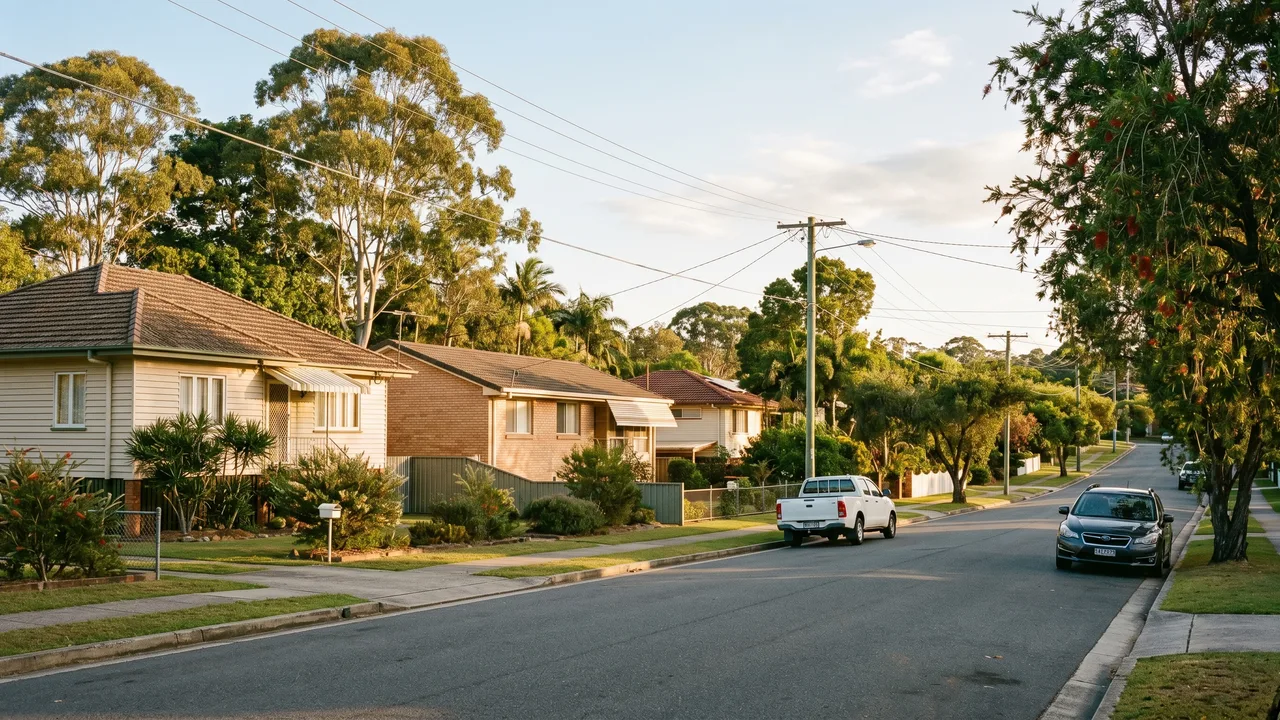
If you own a home built before 1990 in Albany Creek, Bracken Ridge, Sandgate, or anywhere else in Brisbane's northern corridor, there is a reasonable chance asbestos cement sheet is present somewhere on the property. Understanding what drives the price helps you ask the right questions before you invite anyone out for a quote.
Friable versus non-friable: the biggest cost split
Queensland law puts asbestos into two categories, and the difference in removal cost between them is significant.
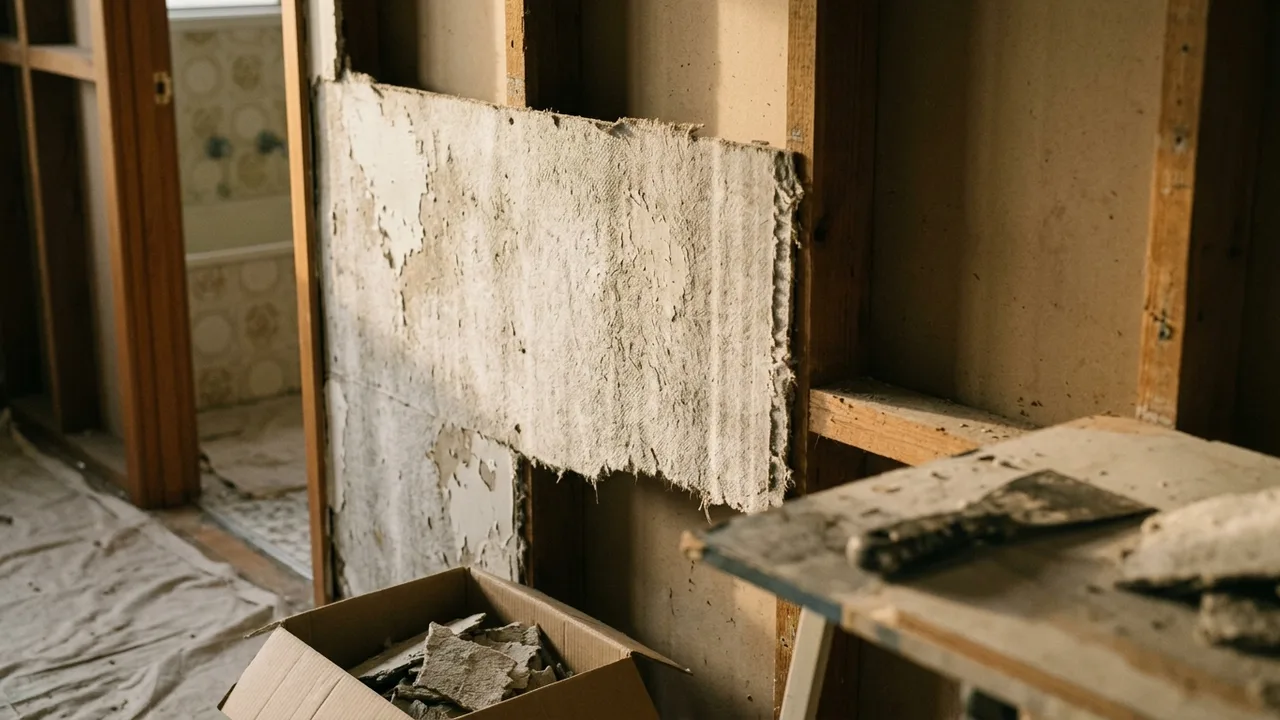
Non-friable (bonded) asbestos is the compressed cement sheet used in flat-sheet cladding, eaves, fences, and roofing. The asbestos fibres are locked into the cement matrix. As long as the material is intact and undisturbed, the risk is relatively contained. A Class B licensed contractor can remove bonded asbestos, and many residential jobs in this category fall in the $1,000 to $5,000 range depending on volume.
Friable asbestos is a different matter. This is material that crumbles under hand pressure and can release fibres into the air with almost no disturbance. Old pipe lagging, loose insulation, and deteriorated textured ceilings can all fall into this category. Friable removal requires a Class A licensed contractor, a higher level of site containment, respiratory protection that goes well beyond a standard P2 mask, and more stringent air monitoring. Expect to pay noticeably more, and in complex cases the premium over bonded removal can be two to three times the base rate.
The practical takeaway: if you have a standard Fibro shed in Albany Creek or a flat-sheet bathroom wall in Carseldine, you are almost certainly dealing with bonded asbestos. If you have an older home with spray-applied ceiling texture or degraded pipe insulation, get a licensed inspection first before assuming anything.
Volume and location on the property
After material type, volume is the next biggest lever. Contractors price by the square metre for sheeting, and by the linear metre for pipes or ridging. A small garage with two sheets of damaged asbestos eaves will cost far less than stripping an entire Fibro clad home.
Location matters too, and not just in the geographic sense. Asbestos that is easy to reach, an external fence panel, a freestanding shed in Bald Hills, a detached garage in Boondall, is generally quicker and cheaper to remove than material in a confined roof cavity, under a floor, or in a bathroom surrounded by plumbing. The harder the access, the more labour time, and labour is not cheap for licensed asbestos work.
Roof removal adds another dimension. Asbestos cement roofing is common on homes built through the 1960s and 70s across Brisbane's northern suburbs, including parts of Ferny Grove and Bracken Ridge. Removing it means working at height, which requires additional safety measures. The roof then needs to be made weatherproof while replacement material is installed, so there is often a combined cost with the roofing contractor. As a rough guide, asbestos roof removal and replacement combined typically sits higher than the removal alone.
Inspection and testing: the cost you should not skip
Some homeowners try to skip a formal inspection to save money. This is understandable but can backfire. If you remove material assuming it is asbestos-free and it turns out to contain asbestos, you may have contaminated the site and created a much larger, more expensive problem.
A licensed asbestos inspection, where a qualified assessor takes samples and sends them to a NATA-accredited laboratory for analysis, typically adds a few hundred dollars to the overall project cost. In most Brisbane inspections, the report will either confirm what you suspected or identify additional materials you had not considered, like textured paint, vinyl floor tiles, or underlay beneath carpet.
The inspection report also gives you something tangible to show a buyer, a tenant, or a solicitor. If you are renovating before selling a home in Sandgate or Brighton, a clear asbestos register is worth more than the cost of the test.
Disposal fees and the clearance certificate
These two line items sometimes catch homeowners off guard when they compare quotes.
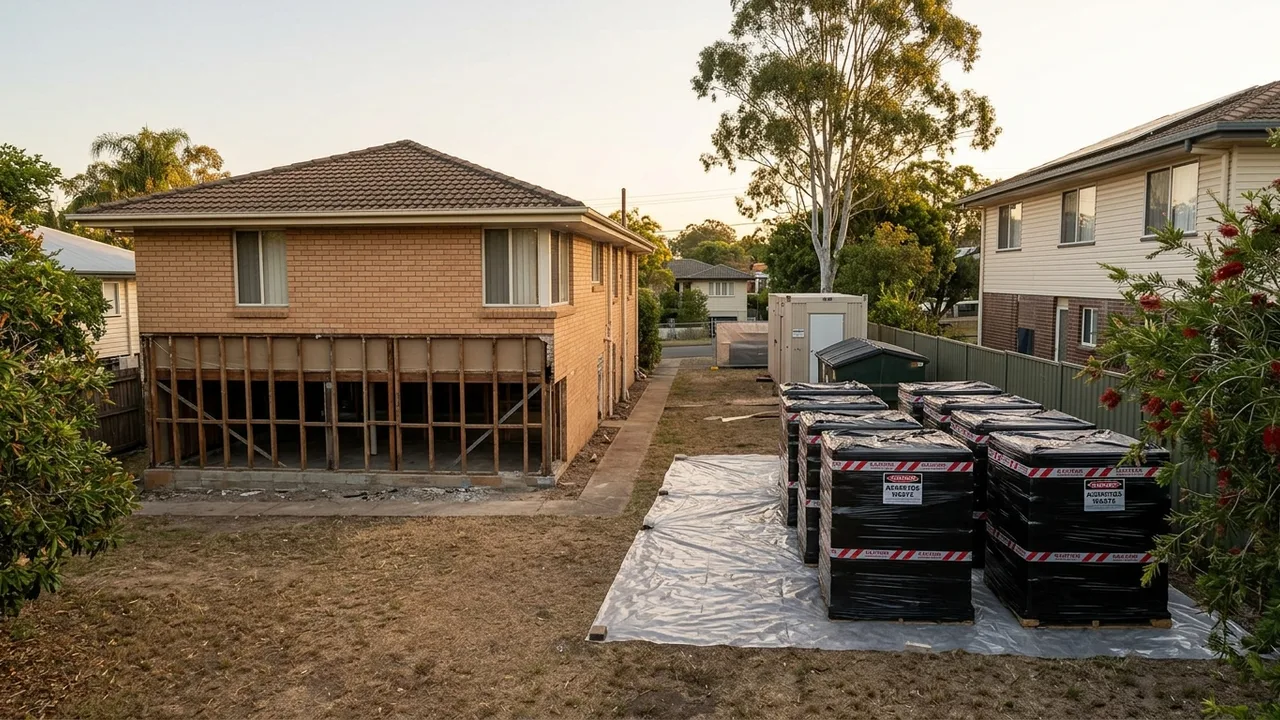
Asbestos waste must go to a facility licensed to accept it. In Queensland, that means approved landfill sites that accept category A or B asbestos waste, double-wrapped and labelled to code. Disposal fees depend on the volume of waste and the facility's gate charges. A small job might incur $150 to $300 in disposal; a large whole-house strip can push disposal costs considerably higher.
The clearance certificate is the document issued by a licensed asbestos assessor after they have inspected the site post-removal and confirmed it is safe to reoccupy. For any regulated removal, this certificate is not optional. It is the thing that shows your insurer, your council, and any future buyer that the work was done properly. Some contractors include this in their quoted price; others list it separately. Ask the question upfront.
What Brisbane-specific factors affect the price?
A few local considerations are worth knowing.
Building age and heritage. Much of Albany Creek, Ferny Grove, and Carseldine developed through the 1960s and 1980s. Homes from this period very commonly used Fibro for wet-area lining, eaves, and occasionally full external cladding. Older Queenslander homes that were extended or renovated during this era may have asbestos additions sitting alongside original timber construction, which can make access and containment more complicated.
Roof type. Corrugated asbestos cement roofing on outbuildings is particularly common in the semi-rural pockets around Bald Hills and the outer edges of Albany Creek. These roofs are often weathered and brittle, which means they need to be handled carefully to avoid unnecessary fibre release, and that careful handling takes time.
Site access. Steep blocks, narrow driveways, and homes with dense vegetation (common through parts of Ferny Grove) can all slow down a job. If a contractor cannot get a vehicle close to the work area, manual carry-out adds time and cost.
Travel and call-out. Contractors based in the northern Brisbane corridor will typically quote more competitively for jobs in Albany Creek, Bracken Ridge, Boondall, and Banyo than a firm based on the south side would. The distance is not huge, but call-out fees are real.
How to make sure you are comparing quotes fairly
Quotes for asbestos removal can look very different on paper even when the job is the same. Here is what to check.
- Is the inspection and laboratory testing included, or priced separately?
- Does the price include disposal fees, or are they estimated and variable?
- Is the clearance certificate included?
- Is the contractor Class A or Class B licensed, and is the licence current with the Queensland Building and Construction Commission (QBCC)?
- What is the assumed scope? Make sure every contractor is quoting on the same area and material type.
Getting two or three quotes is sensible, but the cheapest is not always the safest bet. Licensed asbestos work has non-negotiable regulatory requirements in Queensland, and a price that seems unusually low sometimes means shortcuts are being taken somewhere.
A closing thought
Asbestos removal is not something most people budget for. It shows up during a renovation, a pre-sale inspection, or when a wall gets damaged, and suddenly there is an unexpected cost in front of you. The range of $1,000 to $15,000 is wide, but most single-item residential jobs in the Albany Creek area sit in the lower to middle part of that range.
The best thing you can do is get a proper inspection before committing to anything. Know what you have, where it is, and what category it falls into. That information puts you in a much stronger position when you are reading quotes, and it means you are not paying for unknowns.
If you would like to speak with a vetted local contractor who works across Albany Creek, Bracken Ridge, Sandgate, and the surrounding suburbs, we can connect you with someone who can do the inspection and give you an honest scope before any work is agreed.
Quick answers